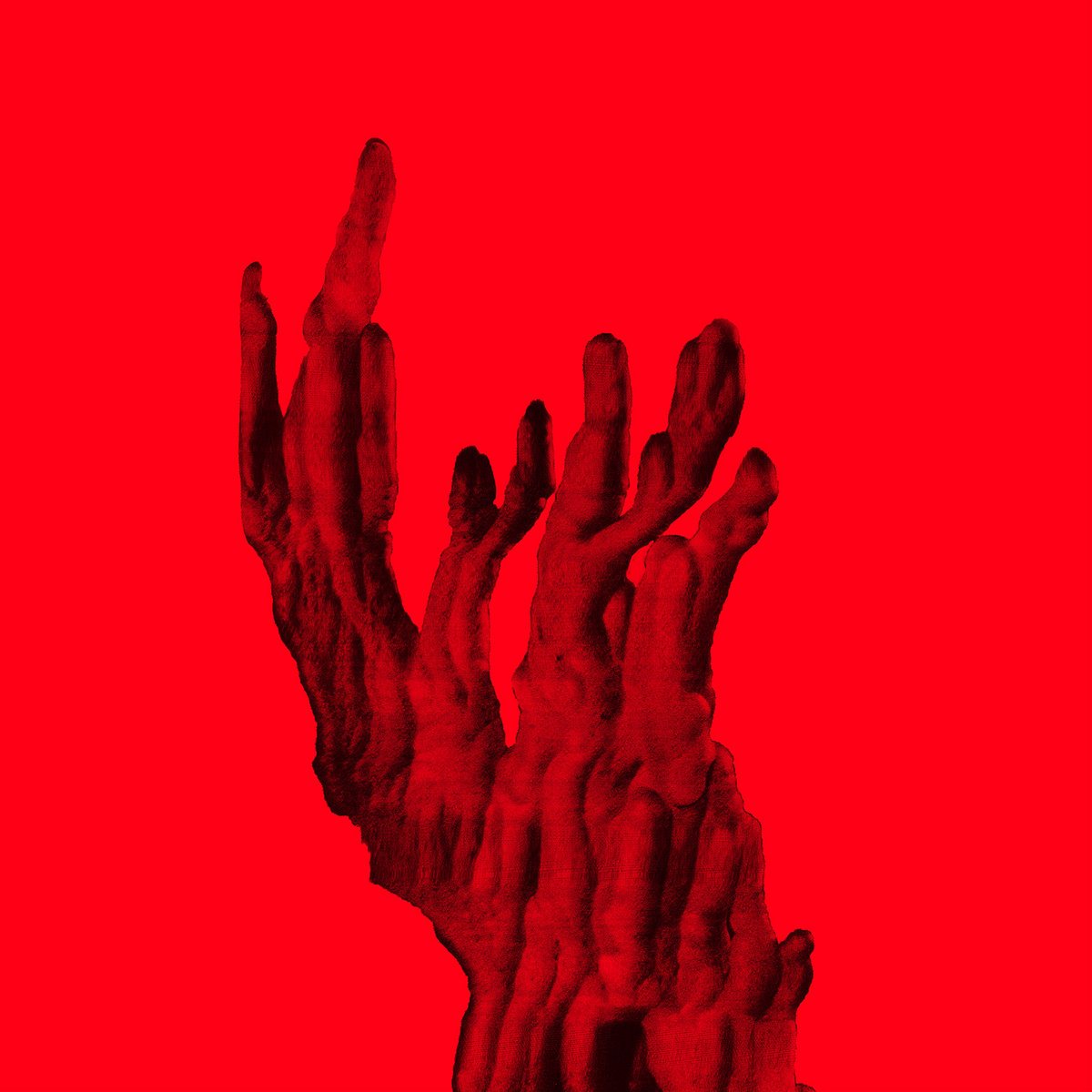
The choir on Speechless is tuned to 441 Hz, one hertz above the concert standard.
It's a small deviation, and Karolina Rec, who records as Resina, doesn't make a fuss about explaining it. But a hertz is enough to make voices trained on standard pitch sound very slightly wrong, and very slightly wrong turns out to be the register the whole record works in.
Rec recorded that choir, twenty-three voices strong, in Gdańsk's Old Town Hall, in the gap between two pandemic lockdowns, alongside cello, drums and field recordings gathered separately at Warsaw's Polish Radio Studio S2 and in her own flat. The sessions ran through late 2020 and into 2021, the same period Poland's Women's Strike movement filled the streets after the country's constitutional court moved to tighten the abortion law; Speechless doesn't set out to soundtrack that protest, but it was written inside it, and the record's interest in language, voice and what happens when neither is available to you carries the mark.
Before Resina existed as a name, Rec was a session and collaborating cellist, working with Maciej Cieślak, Hubert Zemler and Zamilska, and touring in support of acts including Godspeed You! Black Emperor. She started releasing as Resina in 2016, with a self-titled debut on the FatCat imprint 130701, followed two years later by Traces, an album about damaged religious objects and inherited memory that first showed how far she could stretch a single cello through loops and effects until acoustic and synthetic sound became indistinguishable. A remix EP that year drew Ben Frost, Abul Mogard, Lotic and Ian William Craig into her orbit, and by 2020 she had scored the video game Vampire: The Masquerade – Shadows of New York, proof that the same cello-as-electronics approach travels well outside her own records.
Speechless, her first standalone album in three years, pushes that technique towards something closer to Hildur Guðnadóttir's or Jóhann Jóhannsson's scores than to chamber music: dense, physical, unresolved.
Eight tracks in, the choir returns for A Crooked God, stacking harmonies until the tuning drift stops sounding like an error and starts sounding like the point. Elsewhere, on Darwin's Finches, birdsong recordings sit against strings in a way that plays out the album's real subject, nature's total indifference to whatever meaning people try to put on it.
Drummer Mateusz Rychlicki, flautist Magdalena Gajdzica and sound designer Michał Fojcik all contributed to the record, which Daniel Rejmer mixed.