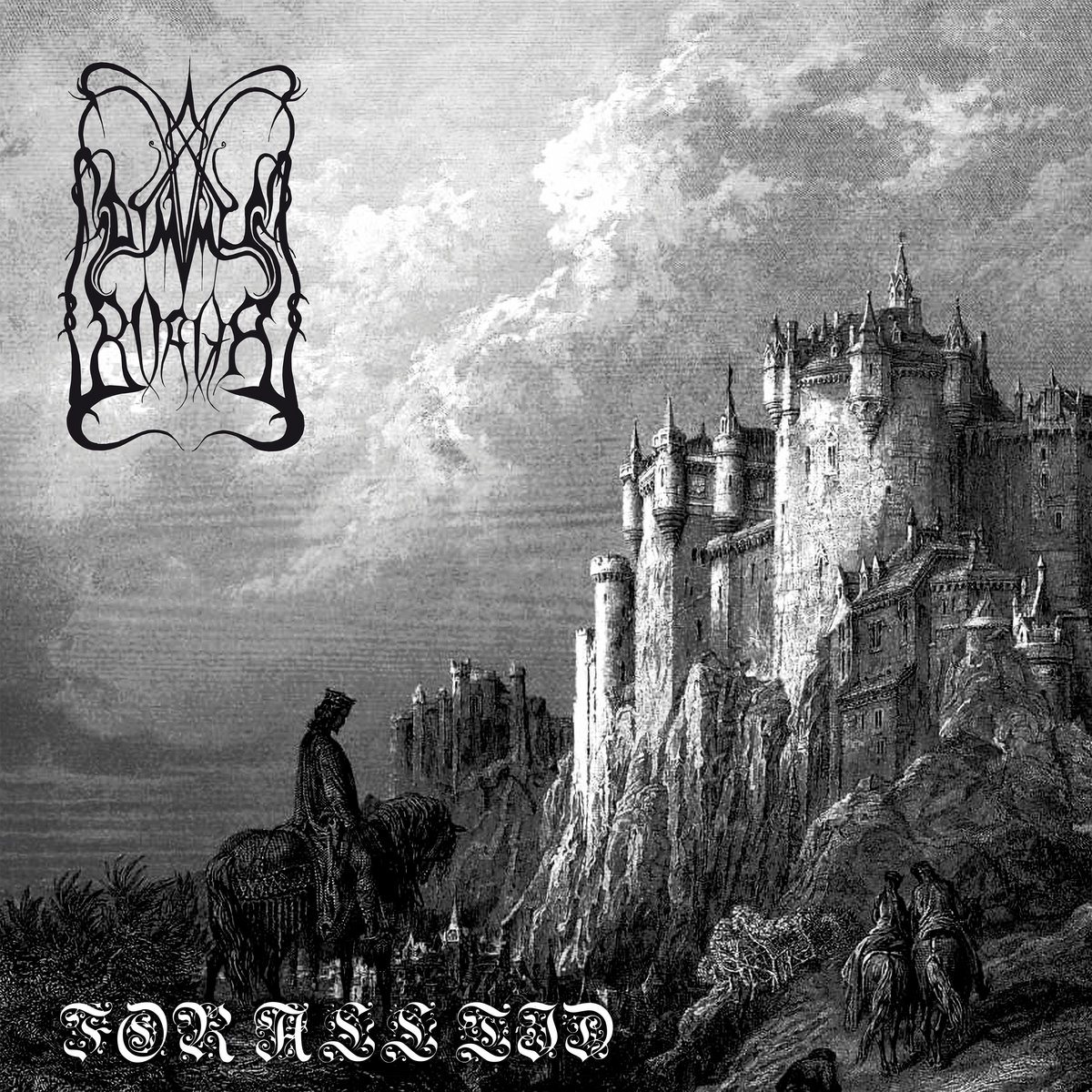
Before there were opera orchestras and triggered drum samples, there was just three guys from Jessheim, a satellite town outside Oslo, working out what a Norwegian black metal band could sound like with strings attached. Dimmu Borgir formed in 1993, took their name from an Icelandic lava field whose name translates roughly to dark castles, and spent the back half of 1994 recording their debut in an Oslo studio called Stovner Rockefabrikk. The result, For all tid, came out the following spring on No Colours Records, and it's a document of a band still assembling its own blueprint. Silenoz handled most of the vocals, somewhat unsteadily; Shagrath, who would later become the face of the band, was still behind the drum kit. It's the only Dimmu Borgir record with that particular configuration, and it shows both in its rawness and in flashes of the ambition to come, particularly on the two-minute broadside “Stien” and the tongue-twisting “Raabjørn speiler draugheimens skodde.”
What makes that debut worth revisiting isn't nostalgia so much as watching a genre-defining idea before it fully cohered. Everything Dimmu Borgir became famous for — the cinematic keyboard washes, the tension between beauty and blast beats — was still theory in 1995. It took Shagrath's move to lead vocals on 1997's Enthrone Darkness Triumphant, and the later additions of clean singer and eventual bassist Simen “Vortex” Hestnæs and keyboardist Øyvind “Mustis” Mustaparta, to lock the formula into place: two contrasting voices, orchestral scale, hooks sturdy enough to survive the blast beats. By the early 2000s the band was recording with the Gothenburg Opera Orchestra and then the Prague Philharmonic, chasing a maximalism that made them, for better or worse, the most commercially successful black metal band of their generation, and one of the few to top the charts in their home country.
That lineup eventually scattered, and Dimmu Borgir spent the better part of a decade in decline before going quiet altogether. Their return this year, Grand Serpent Rising, strips the band back to its two constants, Silenoz and Shagrath, working now with the Bratislava Symphony Orchestra on three of the album's tracks and a rotating cast of session players filling out the rest. It's a leaner record than the band's imperial-phase output, content to let the orchestra frame Silenoz's melodies rather than compete with them. Heard against For all tid, it closes a loop: a band that spent thirty years chasing scale finally finding that restraint suits them just as well.