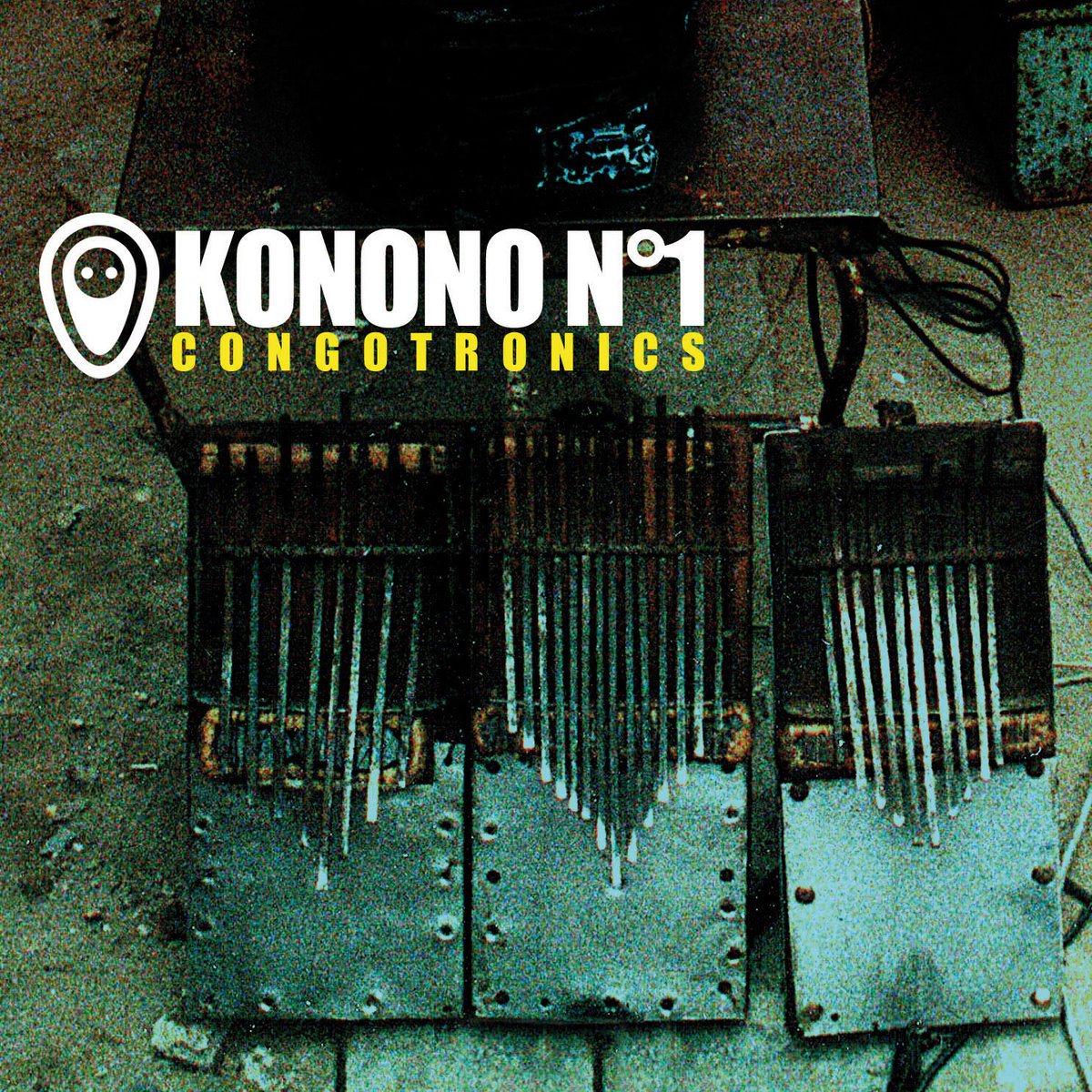
The most important instrument on Congotronics is the one nobody built on purpose. Konono N°1 runs three likembés, the Central African thumb piano, through microphones carved from wood and fitted with magnets pulled from car alternators, then pushes the signal through a PA that was never meant to carry it. The result is a permanent, buzzing overload, and instead of fighting it the band absorbed it into the music. It sounds like a studio decision. It is the acoustic reality of a Kinshasa suburb.
The band is older than most of the people who discovered it. Mingiedi Mawangu, a likembé player who drove trucks for a living, founded Konono N°1 in 1966, and the repertoire he built comes from Bazombo trance music. Moving it to the city meant making it loud enough for a street party, and that meant electricity. The percussion is assembled from whatever the junkyard offered, the singers work through vintage megaphones known as lance-voix, and there are dancers on stage because the audience is expected to move. This is a working band with a working purpose, not folklore under glass.
Congotronics, produced by Vincent Kenis for Crammed Discs and released at the turn of 2005, was the record that carried all of that out of Kinshasa. Seven tracks, just under fifty-one minutes. Lufuala Ndonga opens with nine and a half minutes of interlocking likembé lines that never quite resolve, and Mama Liza closes with ten. Paradiso, in the middle, is the piece that got played to death in clubs and on radio, and it is easy to hear why: the bass likembé pulses like a kick drum, the top line saws away like a filtered synth, and the whole thing sits closer to Detroit techno or Can at their most hypnotic than to anything sold as world music. The album's afterlife in dance and alternative rock circles was as strong as its reception in traditional music circles, which suggests the audience heard it correctly.
The honours followed quickly. Konono N°1 won the BBC Radio 3 newcomer award in 2006, appeared on Björk's Volta in 2007, and picked up a Grammy nomination for the concert record Live at Couleur Café. Herbie Hancock brought them onto The Imagine Project and they anchored the Congotronics vs Rockers project in 2011. Crammed turned the album's title into a series, and the label's Kasai Allstars are its closest relatives.
Mingiedi died in April 2015 at 85, and his son Augustin, who had led the group since around 2009 and steered the 2016 collaboration with Angolan-Portuguese producer Batida, died two years later. Augustin's son Makonda now holds the likembé. The lineage matters: the sound belongs to a family and a neighbourhood, not to a producer or a moment, and Congotronics is simply the clearest recording of what they have always done.