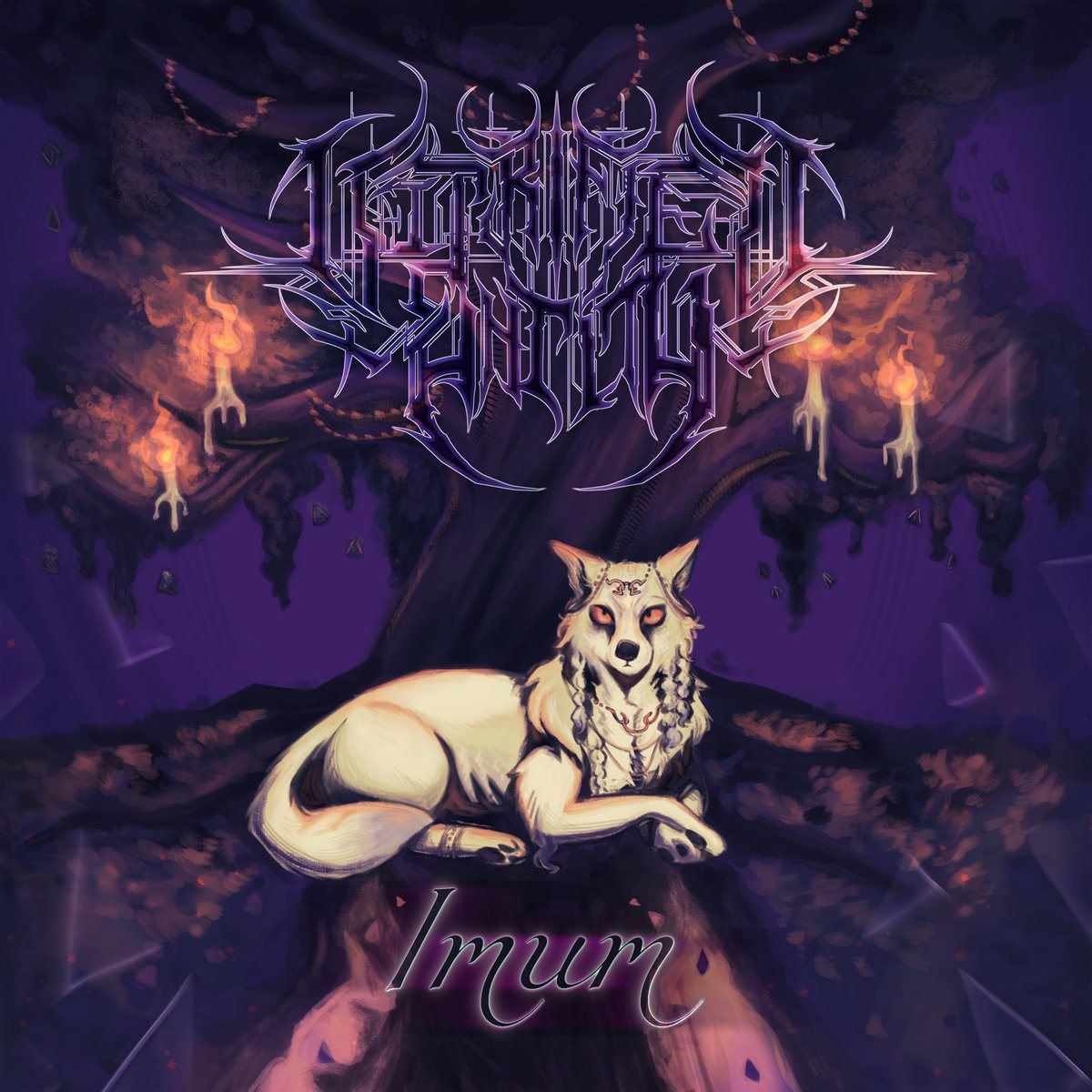
The strangest thing about Imum is that its duelling guitar solos were never written as a duel. Alice Simard finished the compositions for Vitrified Entity's second album at roughly the same time as the first, sometime around 2021, and left them alone for years before she ever thought to share them.
She is twenty-two, based in Montreal, and currently runs something like twenty-seven active projects, each one a different name for a different idea about extreme metal: black metal as R'luhh, brutal death metal as Codex Crudelitas, melodic death metal built around unusually intelligible growls as Luminesce. She started at eleven, picking out Death's "Suicide Machine" on a broken acoustic guitar, and moved to electric a year or two later. Vitrified Entity, instrumental and technical, is one register in a very large range.
What changed the solo-written material into a duet was Eetu Hernesmaa. Simard sent him the finished tracks so he could record fretless bass, and he came back with an idea: lead guitar lines threaded around the parts she'd already written. She has called the result a retroactive duel, since her solos were fixed in place long before his existed, and the two guitars now sit hard-panned across the stereo field, answering each other rather than trading off.
That panning is the record's most distinctive trick.
Each guitar occupies its own side of the mix and behaves as though it doesn't know the other exists, which turns tracks like the title cut into something closer to two overlapping compositions than one arranged piece. The riffs draw on classical counterpoint as much as death metal's usual vocabulary, all articulation and interval rather than brute chordal weight, with programmed drums kept functional rather than showy underneath.
The album closes on a rearrangement of "Dracula Battle," the theme from 1989's Castlevania III: Dracula's Curse. Simard also runs Plagueling, a project built entirely around video game music, and she has said plainly that most metal covers of game themes bore her: the same power chords under the same reverb-heavy lead, harmonised once and left there. Her version turns the melody into technical riffing instead of decoration, which is consistent with how she treats her own back catalogue too. Nothing stays as first written if there's a sharper way to hear it later.
Imum, self-released in April, followed 2021's Eternal Vitreous Dissolve and continues its cosmic narrative of scattered carriers and dissolving matter, concept notes included. Simard maintains, unprompted, that no AI touched any part of it. Given how deliberately worked-over these tracks are, that claim is easy to believe.