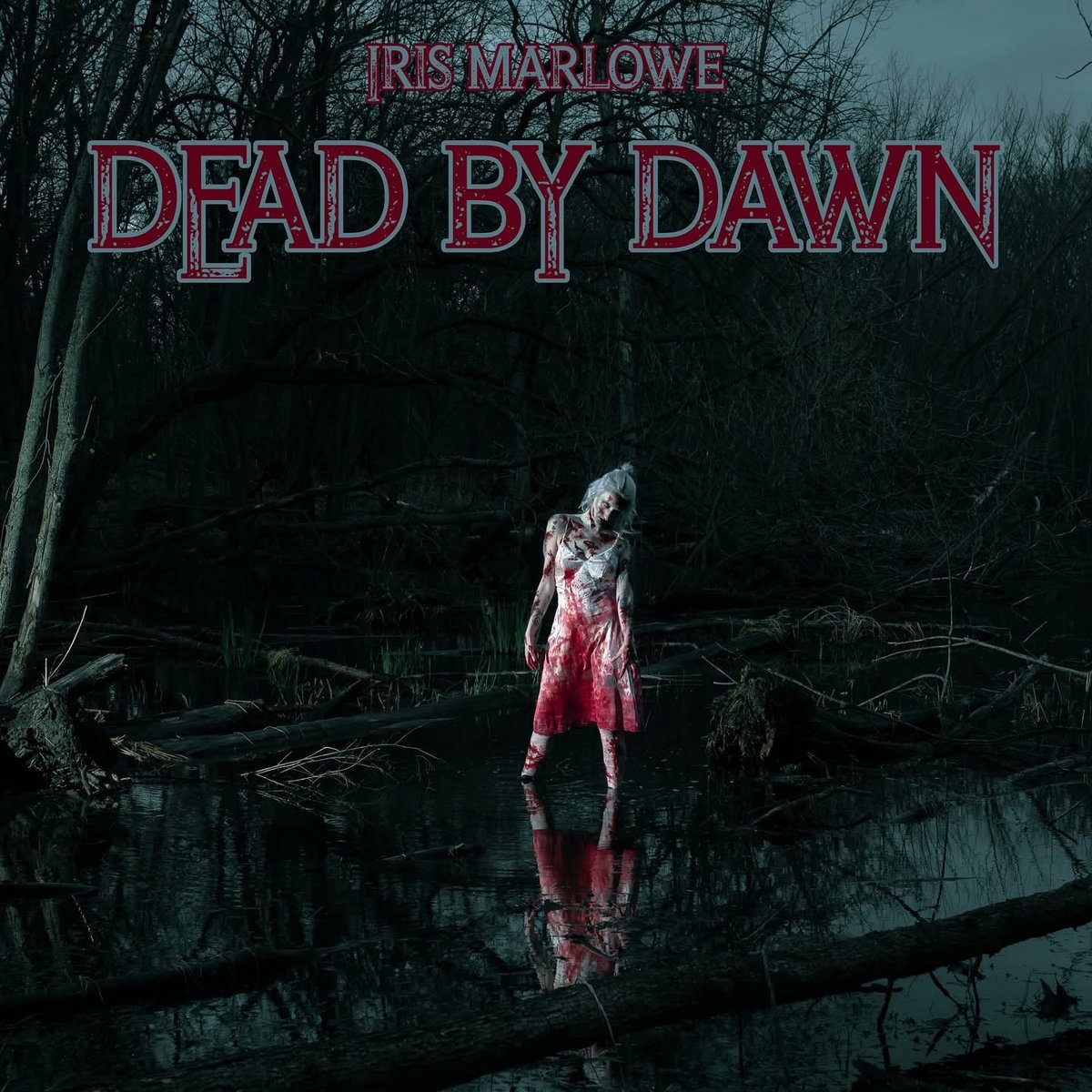
Iris Marlowe did not set out to reform country music from the inside; she set out to make room in it for people like her. Raised in a small Illinois town on a diet of Johnny Cash and Sonny James courtesy of her grandfather, and on a strict Catholic upbringing she'd already started questioning by adolescence, she came up in a genre whose politics often left her cold. She eventually found her way into Chicago's queer country scene and, by her own account, felt accepted as a musician and a queer person for the first time. That origin story matters, because Dead By Dawn, her Halloween-released album, is what it sounds like when someone builds a haunted house out of a tradition that once locked her out.
The record takes its title and its premise from Evil Dead 2, the 1987 Sam Raimi film in which demonic voices taunt the living with the promise that they'll be dead by dawn. Marlowe runs that line through a spaghetti western filter, and the result plays like a horror movie shot on a dusty film-noir set: ten songs, sequenced like acts, that move from Crooked Crow and Witch of the Blood Red Moon toward Burn Those Bodies and Two Step Into Hell. It follows Where the Devil Bid the Owl Goodbye, an earlier record built as a three-part narrative about an entity that consumes cowboys' souls; between the two albums, Marlowe has effectively been writing a horror franchise with reverb and pedal steel instead of jump scares.
What separates her from novelty is the sincerity underneath the theatrics. She has described her own music as the sound of Stephen King writing country songs, a fair shorthand for the way campfire dread and genre pulp sit alongside real vulnerability in her lyrics. Her influences run wider than the genre's gatekeepers would predict — she names Beyoncé and Britney Spears in the same breath as Cash, and David Lynch's aesthetic alongside grindhouse horror — and that range shows up as confidence and showmanship rather than pastiche. She has said she wanted to write country stories for the eccentrics of the world, for people who never saw themselves in the genre's landscape, and Dead By Dawn reads like the fullest version of that promise yet.
Marlowe has built her career inside a specific community rather than around it, sharing bills with acts like Olivia and the Lovers and citing artists such as Andrew Sa as proof of how deep the local scene runs, and she calls Chicago's queer country underground — its stages at Reggies Chicago and the Lavender Prairie Festival among them — one of the great privileges of her life. A solo performance at Struther's Library Theatre in Warren, Pennsylvania, for the Roots Rising series, left her visibly moved, evidence that beneath the fog machine and the fake blood is a performer who still treats a quiet room as sacred. That tension, between camp and sincerity, between the graveyard and the pew, is what makes Dead By Dawn feel like more than a costume.