Geoff Smith has spent the better part of fifteen years making music that keeps people at arm's length, so it is a little disorienting to hear him make something that wants to be sung along to.
Smith is the frontman of Haldol, the Philadelphia band he has led since around 2010, and the sound he built there is closer to a wound than a hook: icy, minor-key, indebted to the early Cure and the Birthday Party more than to anything with a chorus. Haldol's 2020 album Negation, released on Play Alone Records in the group's tenth year, leaned further into that discomfort, with singles Truth of an Arrow and Fear and Fascination written, Smith has said, out of self-recording sessions and a lineup change that left him working much of the record out alone. He has also sung in eX-Tradition, another Philadelphia post-punk outfit built on the same unglamorous, DIY circuit that has kept Haldol going for over a decade without much outside attention.
None of that quite prepares you for The Spine.
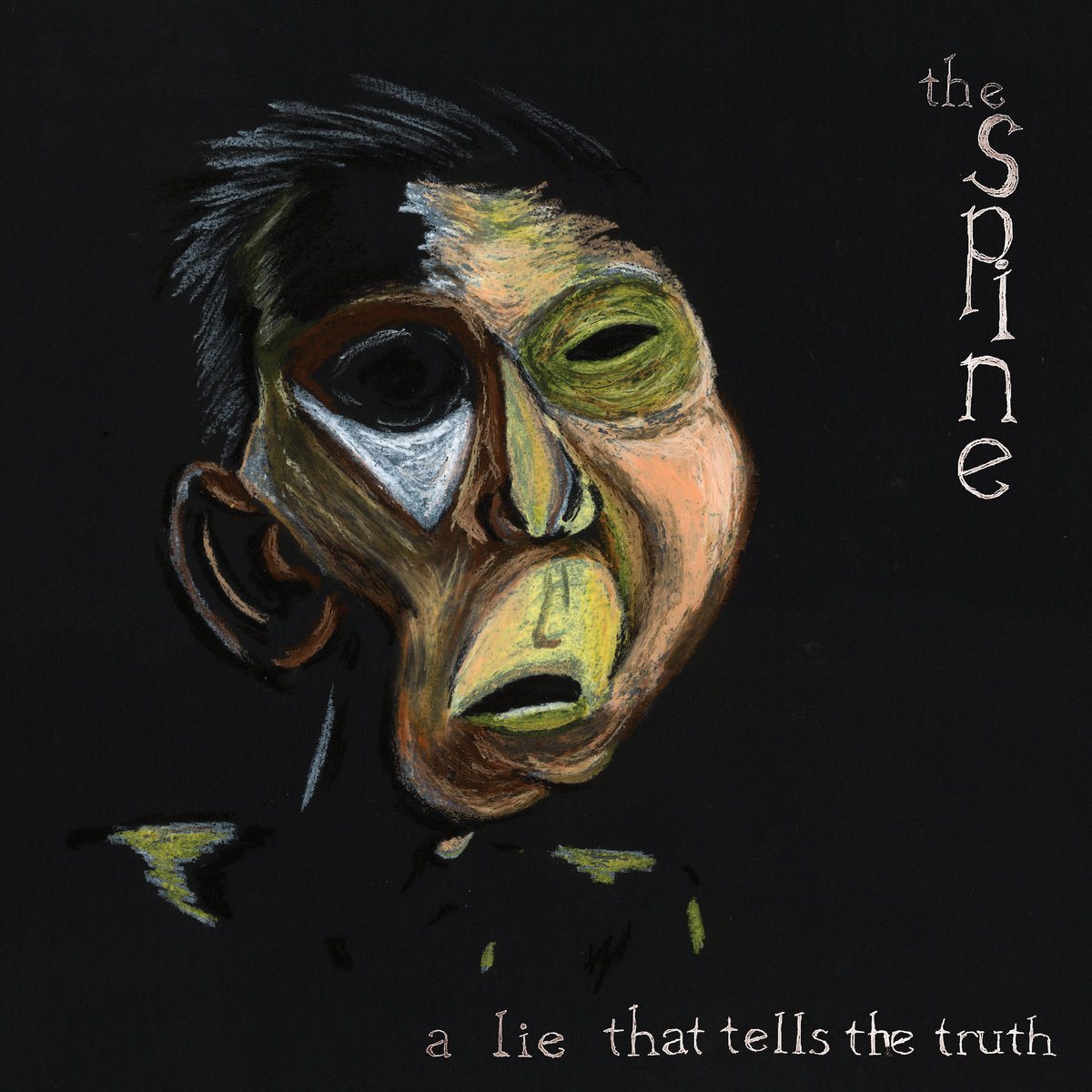
Billed simply as Geoff Smith with the support of friends, The Spine surfaced in mid-2024 with a four-track demo, In Search of a New Lake and Second Floor among its songs, that suggested a slightly gentler register than Haldol without abandoning the gloom. Two years on, the project's follow-up, A Lie That Tells the Truth, arrives as an album that is, for now, a single song. That is an odd thing to call an LP, but the song itself is the more interesting fact: twangy, shimmering guitar rings out over tom-heavy, tribal drumming, and Smith's vocal, usually so buried in his other bands, comes right up to the front of the mix and stays there.
That is not a coincidence so much as a return address. The tribal drums, the chiming guitar, the outsized voice pushed hard against the top of the mix: all of it belongs to the same early-80s British moment that produced Blood and Roses and The Cult, before goth hardened into a uniform of its own. Smith would not call himself a positive punker, and nothing in his back catalogue suggests he set out to chase that scene on purpose.
But the components are sitting right there in the arrangement. What makes the song work is that it doesn't sound like homage; it sounds like someone who spent a decade and a half making deliberately unwelcoming music finally letting a melody win an argument. Coming from inside Philadelphia's small, unglamorous deathrock scene rather than from a British goth revivalist, that makes the song's warmth feel earned rather than borrowed.