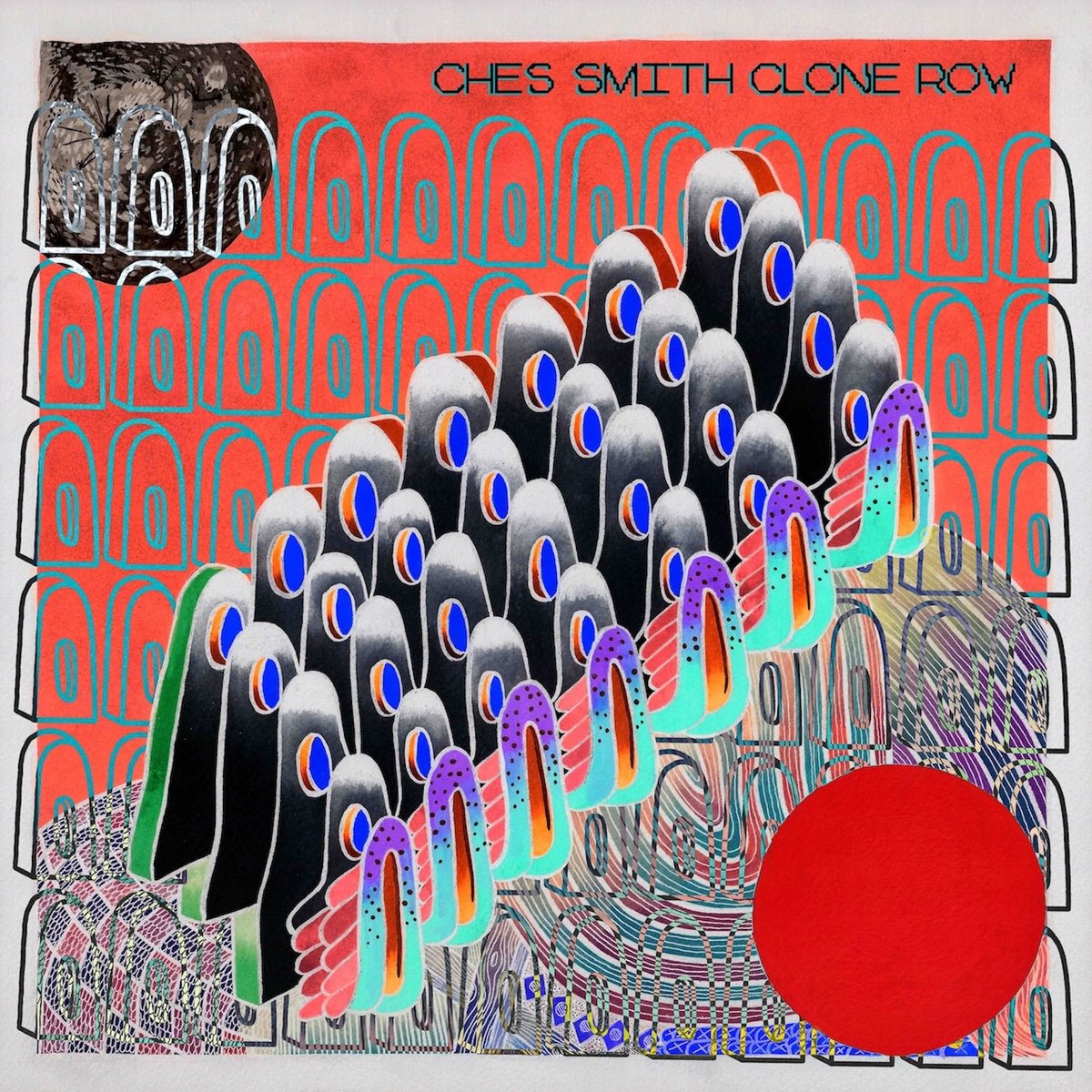
Clone Row is a pun on tone row, Schoenberg's method for ordering all twelve notes before repeating any of them. Ches Smith is not writing twelve-tone music here, but the joke gives away his approach: structure first, personality worked out inside it.
The album, released on Otherly Love Records in June 2025 digitally and that October on vinyl, is a quartet date built around two guitarists set hard left and right, Liberty Ellman on the left, distorted intervals and exact picking, and Mary Halvorson on the right, running noise pedals through phrases that bend and snap. Nick Dunston holds bass and electronics between them, and Smith plays drums, vibraphone and his own electronics from the centre, writing every piece himself.
Each of the seven tracks sets the two guitars a different problem.
Sometimes they shadow each other in tight unison before splitting into argument; elsewhere Ellman lays down a rhythmic bed for Halvorson to pick apart, or the two trade so quickly the ear struggles to keep the channels straight. It is a composer's record played by musicians who also happen to improvise well, closer in spirit to a score than a blowing session, even when the playing gets loose.
Marc Ribot, who wrote the liner notes, calls it a composer's record most of all, and there is something to that: the record has a poise that keeps its polyrhythms, some of them drawing on Haitian rhythmic ideas Smith has studied for years, from ever tipping into chaos. Producer David Breskin and mixer Ben Greenberg keep the two guitars distinct even at their most tangled, so a track like the title cut, or the closing Play Bell (For Nick), reads as counterpoint rather than clutter.
Smith's own drumming is the least showy thing on the record, which is the point. He built his reputation as a first-call sideman long before Clone Row, playing in Tim Berne's bands alongside stints behind Halvorson herself in her sextet Amaryllis and elsewhere.
That network of overlapping bands is where the record's cast comes from. Halvorson and Smith have played together for years across each other's projects; Ellman built his name partly through his long tenure in Henry Threadgill's Zooid and his own albums for Pi Recordings; Dunston has become one of the more sought-after young bassists in New York's improvised scene.
Clone Row does not sound like any of those other bands, though. It sounds like a drummer who has spent a career serving other people's music finally deciding exactly how he wants his own to be built, note by note, guitar against guitar, until the structure disappears into the sound of four musicians listening hard.