As a boy in St Paul, Minnesota, Tod Dockstader spent whole summers confined to a hospital bed, eczema bad enough to keep him alternating medicinal baths with hours lying alone in a darkened room. The only company allowed him was a radio. Most children in that position would have wanted the plays and the songs and nothing else. Dockstader wanted the mistakes too, the moment a signal slipped and crossed with another, the presence still audible underneath the static once everyone sensible had switched off. He kept his set running through the interference rather than past it.
That habit of listening never left him.
He came to composition sideways, the way most of the postwar tape pioneers did. Dockstader worked as an apprentice film editor at UPA, the studio behind Mr. Magoo, before moving into sound editing at Gotham Recording Studios in New York, where he began splicing and layering tape in his off hours using little more than sine-wave test generators. He had no formal training and no interest in acquiring any. Eight Electronic Pieces, his 1961 debut, announced a musician working entirely by ear, and Federico Fellini later borrowed from it for the soundtrack of Satyricon. It placed Dockstader, self-taught and largely unaffiliated with any studio or institution, in company with Stockhausen, Varèse and Cage, without him ever needing their credentials to get there.
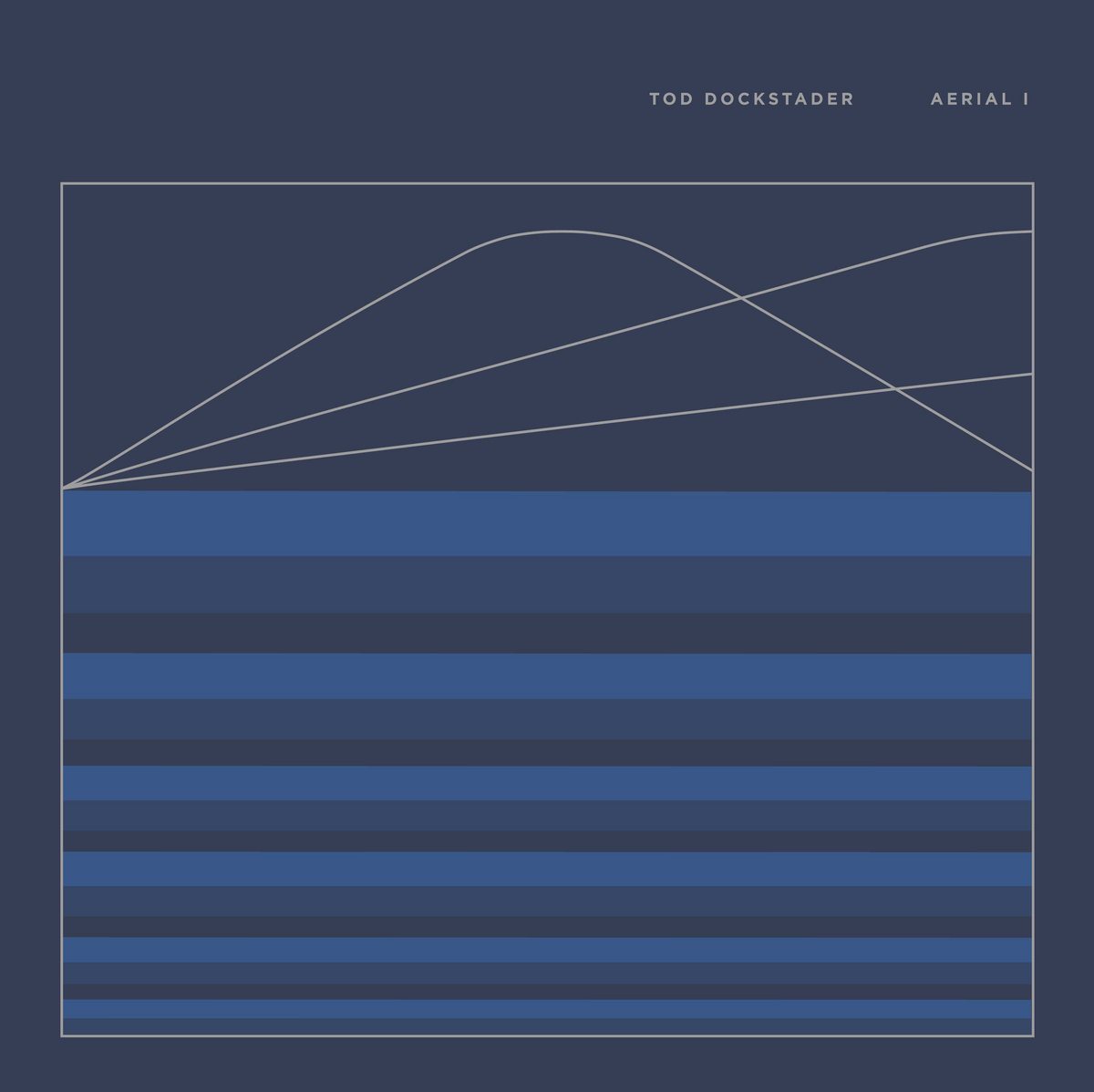
Aerial 1 returns him to where he started, radio static as raw material, except this time the childhood hospital room has become a fifteen-year project. Beginning in the late 1980s, Dockstader spent nights recording shortwave transmissions as they drifted, crossed and dissolved, eventually amassing ninety hours of tape, which he then painstakingly culled and edited into the three-part drone opus released as the Aerial series. What survives on record is patient rather than dramatic: airwave drones that build and thin out, voices running backwards, snatches of ocean sound and electro-rhythm assembled from the wreckage of a hundred broadcasts nobody else thought worth keeping. Little here resembles a composed piece in the conventional sense. It behaves more like weather, drifting in from somewhere specific and refusing to resolve.
Dockstader made almost none of this collaboratively, which is part of the point. Where Cage handed control to chance operations and Stockhausen scored a whole ensemble's worth of interaction with the dial, Dockstader worked alone with his own private archive, more collector than orchestrator. Aerial 1, first released in 2005 on the Belgian label Sub Rosa and later reissued on vinyl by Important Records, plays like a diary kept for decades and only later organised into something a stranger could listen to. It never asks to be liked. It asks to be heard the way he once heard it, alone, at night, waiting for the interference to say something.