Les Disques du Crépuscule had been waiting for Vini Reilly since 1980. The Brussels label, founded that year by Michel Duval and Annik Honoré out of their work booking the Plan K venue, took its name from the French word for twilight and had already built a catalogue running from Michael Nyman to Tuxedomoon by the time it also ran a Factory Records offshoot called Factory Benelux, whose second release was a Durutti Column single. Sixteen years and a collapsed parent label later, Crépuscule was still there, and in 1996 it put out Fidelity, catalogue number TWI 976, the album that gave Reilly a proper home again.
Factory had gone under in 1992, taking with it the sense of shelter Reilly had enjoyed since Tony Wilson signed him as the label's first act. Fidelity was recorded for a company that had known The Durutti Column longer than Factory itself had survived, run by people who had never stopped believing there was a market for Reilly's particular kind of quiet.
It does not sound like a record made by someone starting over.
Fidelity plays as a companion to 1990's Obey the Time, working the same electronic pulse into something warmer and more song-shaped, with Eley Rudge sharing vocal duties across tracks such as the title cut and For Suzanne. Reilly's guitar sits inside the programming rather than above it, and the record's best moments, Grace among them, let his playing and Rudge's voice trade the lead without either one performing.
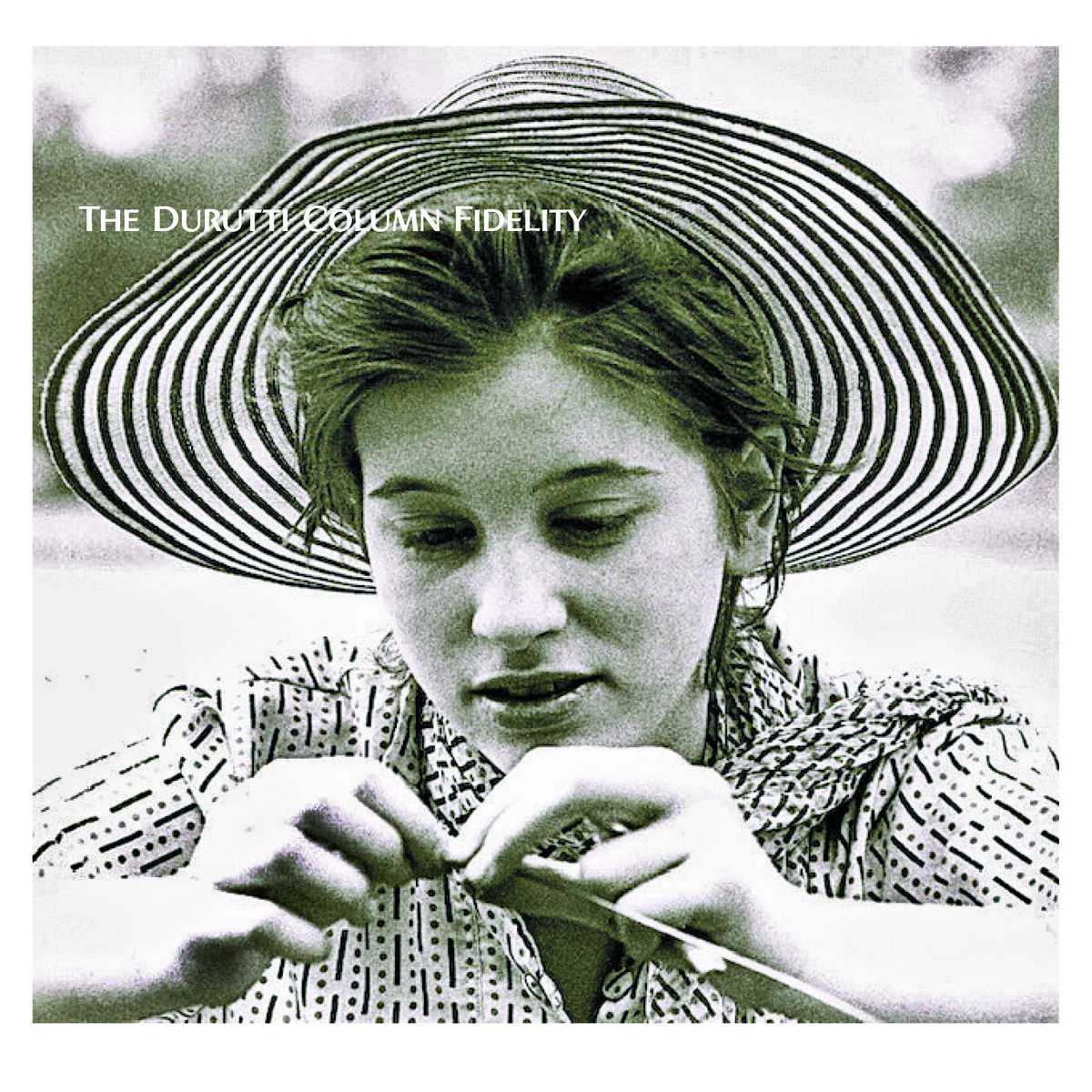
The sleeve, designed by Crépuscule art director Benoît Hennebert, uses a portrait Reilly himself had painted of the filmmaker Carol Morley, a detail that says something about how Reilly worked by 1996: painting as readily as recording, and treating both as the same kind of attention. Fidelity also marks the start of his and drummer Bruce Mitchell's long working relationship with producer Keir Stewart, a partnership that would run through Rebellion five years later and on to Idiot Savants and the tribute Reilly eventually recorded for Wilson.
None of this made Fidelity a comeback record, because Reilly had never really been away; Factory's disappearance was a business event, not an artistic one, and The Durutti Column simply carried on with a different name on the spine. What Crépuscule offered was continuity rather than reinvention, which suited a musician who had spent two decades treating consistency as a virtue rather than a limitation. Fidelity is the sound of that arrangement working: unhurried, faintly melancholy, and entirely unbothered by which logo happened to be printed on the sleeve or which country the cheques arrived from.