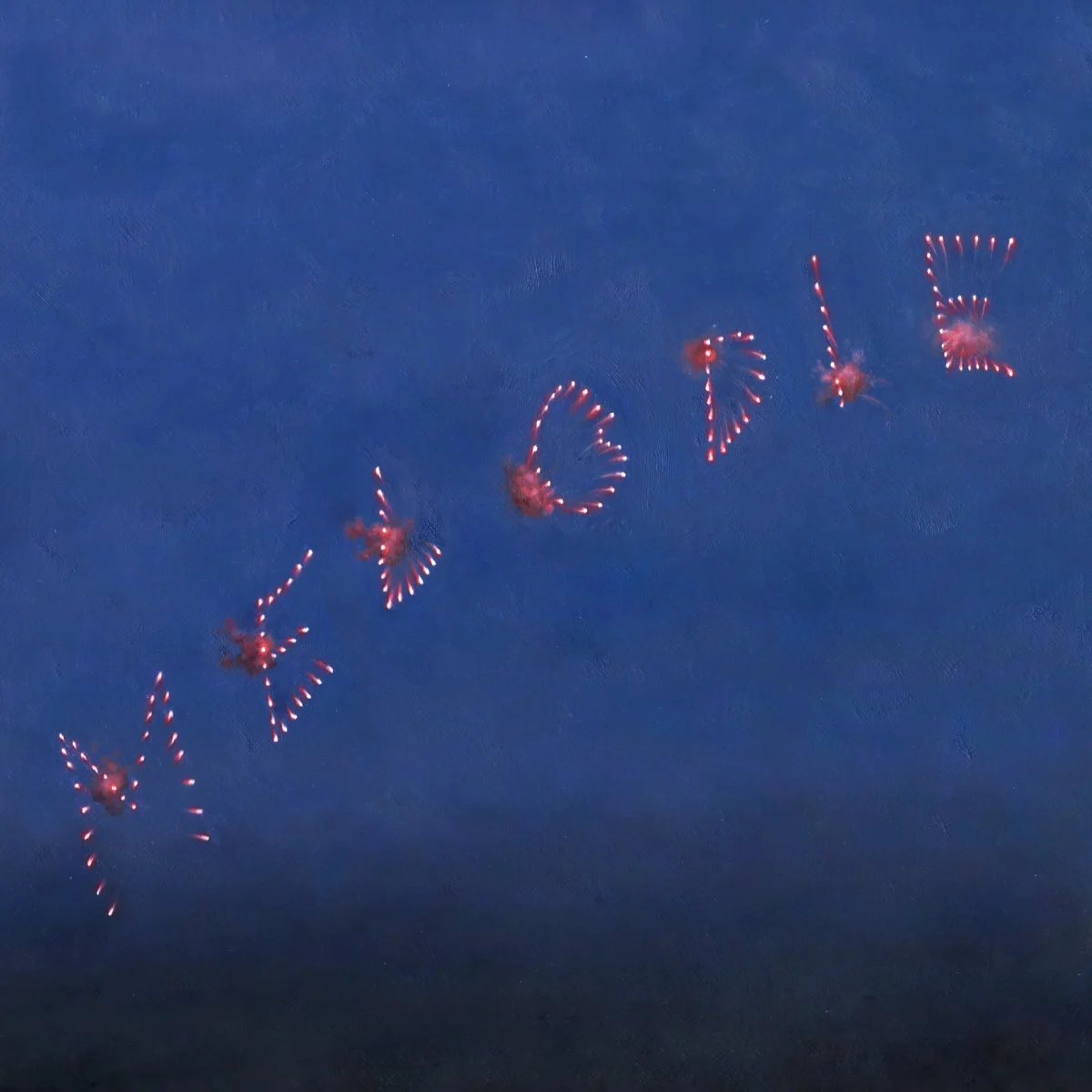
Slow Pulp are an indie band based in Chicago. Melodie is their third album and their second for Anti-. The record arrives after a period in which the band — who have played together in some form since high school — navigated illness and other setbacks while redefining what they want from their songs.
The arc of Slow Pulp's career has been one of steady reorientation. Early work leaned on lo-fi dream-pop textures; a later record revisited '90s alternative and country inflections. Melodie continues that refusal to sit in a single lane: it opens in gentle indie-folk, detours through heartland-tinged balladry, then accelerates into sharper, more angular guitar and new-wave rhythms. A review in The Line of Best Fit summed it up by saying Melodie "hums with the confidence of a band that's coming into their own."
What makes Melodie distinctive is less one signature sound than a shifting set of priorities. Producer Elliott Kozel, brought in to work with the band, is credited with helping unlock what feels like a second gear: arrangements that sparely but deliberately alter momentum, and instrumental choices that push some songs forward without erasing the band’s more reflective moments.
Emily Massey remains the album's emotional centre. Her lyrics trace memory and motion — not in the abstract, but in small, tethered scenes. On the title track and on moments like "Up To You," Massey negotiates directness and a kind of restrained urgency; a single word or a slurred syllable will carry the weight of a whole line. Guitarist Henry Stoehr also takes a more prominent songwriting role this time, a shift the band have noted is closer to how they operated back home in Wisconsin.
Rhythm is a recurring device across the record. Teddy Mathews’ drumming provides propulsive punctuation on headier tracks: the album’s "Red Car" is driven by what one write-up called a go‑go beat and Alex Leeds’ forward bass, yielding a new-wave push that contrasts with the record’s softer openers. Where other Slow Pulp records leaned hard into linger and atmosphere, Melodie often chooses motion — even when the motion is a patient, deliberate one.
That variety has a cost. The album's pacing can feel uneven; sequences that sprint into brighter territory are sometimes followed by stretches that close down into slowcore-tinged quiet, and the transitions don't always land with equal force. But the trade-off is an album that refuses a single affect: it allows tenderness, nostalgia and low-key rebellion to coexist, sometimes within the same song.
Collaborators and crew matter here. Kozel’s production choices are visible in the record’s sharper moments, and the group’s live chemistry — onstage as recent special guests for anniversary dates by The Postal Service and Death Cab for Cutie — shows how the songs translate outside the studio. Those tour slots position Slow Pulp before wider audiences, but the album's real claim is quieter: a band attentive to craft, willing to reassign roles and to let a song find its own direction.
Melodie’s strongest asset is its attention to continuity. Even when it pivots styles, the songs keep returning to a set of concerns — memory, regret, the practicalities of moving forward — that Massey delivers without melodrama. If the record occasionally loses its tempo, it never loses its through line: these are songs made by players who have known one another long enough to make space for change.
For listeners tracking contemporary indie that refuses tidy categorisation, Melodie is less a manifesto than a document of transition: a band reworking its cast of influences, testing new arrangements and nudging center stage a songwriter whose perspective has become the record’s true backbone.