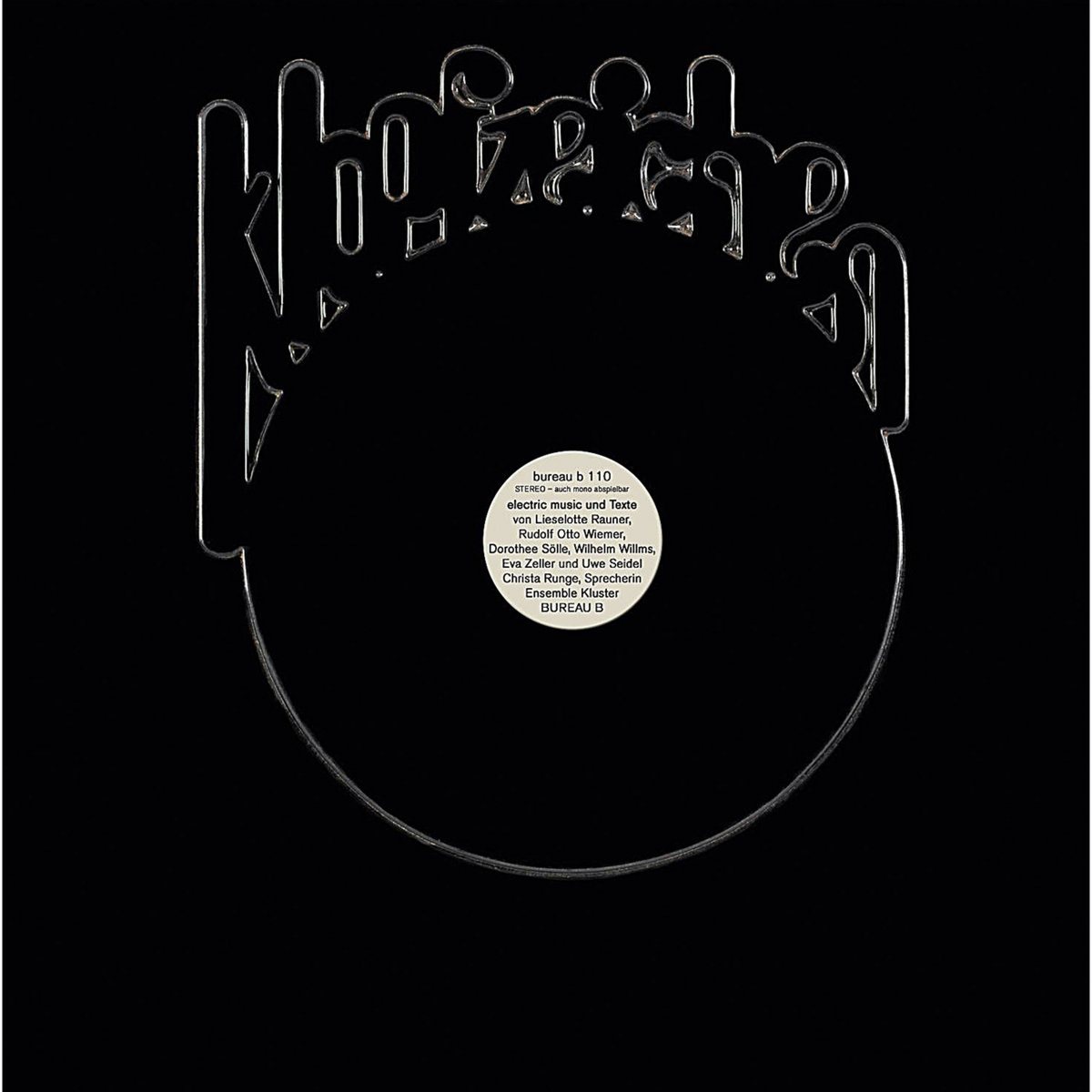
Before electronic music became sleek, Kluster made it feel like damaged infrastructure. Klopfzeichen is full of electricity behaving badly: tones smear, metal seems to buckle, organ and guitar lose their familiar outlines. The point is not to identify instruments. It is to hear sound becoming material.
Hans-Joachim Roedelius, Conrad Schnitzler and Dieter Moebius came together in the experimental orbit of West Berlin’s Zodiak Free Arts Lab, co-founded by Schnitzler. Their shared background was not that of a conventional rock band. Schnitzler and Moebius had studied with Joseph Beuys, and the trio approached performance with an art-school suspicion of fixed form.
On Klopfzeichen, that attitude becomes brutally practical. Electric guitar, organ and cello sit alongside sound generators, processing and tape techniques. Instead of verses or solos, the music advances through pressure, repetition and changes in density. Even when a recognisable instrumental colour surfaces, it rarely remains intact for long.
The first side adds another destabilising element: a female spoken voice over the group’s turbulent electronics. The second is instrumental, leaving the listener inside an extended field of drones, pulses, collisions and feedback. Rhythm exists, but not as a dependable beat. Events recur slightly altered, making repetition itself feel unstable.
Conny Plank engineered the record. His importance here is already obvious: the music can be dense without collapsing into an undifferentiated blur. Individual sounds retain their edges even when the trio is pushing them through echo and amplification. That clarity makes the violence more vivid.
The album appeared on Schwann, a label associated with classical and church recordings, an improbable home for music this abrasive. Only 300 copies of the original pressing were made. The mismatch is part of the record’s character: experimental club music entering the world through institutional channels that were never designed for it.
There is a temptation to hear Klopfzeichen chiefly as a historical precursor. That undersells its physical strangeness. Kluster are not making a blueprint for some later genre; they are testing how little conventional musical grammar they need before a performance still feels coherent.
The answer is: very little.
What holds the album together is attention. Roedelius, Schnitzler and Moebius listen through the noise, responding to timbre and momentum rather than chord changes. Klopfzeichen remains difficult because it refuses to reassure. It also remains alive for exactly the same reason.