Joel Xavier was a blues guitarist signed to a major label before he'd left his teens.
Born in Lisbon on 25 April 1974, he taught himself guitar at fifteen, switched from classical to electric, and by sixteen had a contract with BMG. His 1992 debut, 18, was straightforward blues playing from a boy barely out of school. Three years later he flew to Los Angeles and won the NAMM-SHOW guitar competition against seventy other players, which is the kind of detail that tends to get exaggerated in retelling except that American critics at the time backed it up, naming him among the year's five best guitarists working in the country.
What he did with that early attention is more interesting than the attention itself. Through the second half of the 1990s, records like Sr. Fado and Palabra de Guitarra Latina pulled his playing away from straight blues and toward something built from Portuguese fado, the melodic ache of a form usually carried by a singer, reimagined as an instrumental language crossed with jazz harmony and Latin rhythm. He has described the project in his own words as a new musical language sitting between fado and jazz, and the comparison that holds up is to Astor Piazzolla's nuevo tango or Richard Galliano's musette: a folk tradition rebuilt from the inside using another idiom's tools. It brought him onto stages with Paquito D'Rivera, Michel Camilo, Arturo Sandoval and, on 2003's Lisboa, Toots Thielemans.
Then he stripped it down to almost nothing.
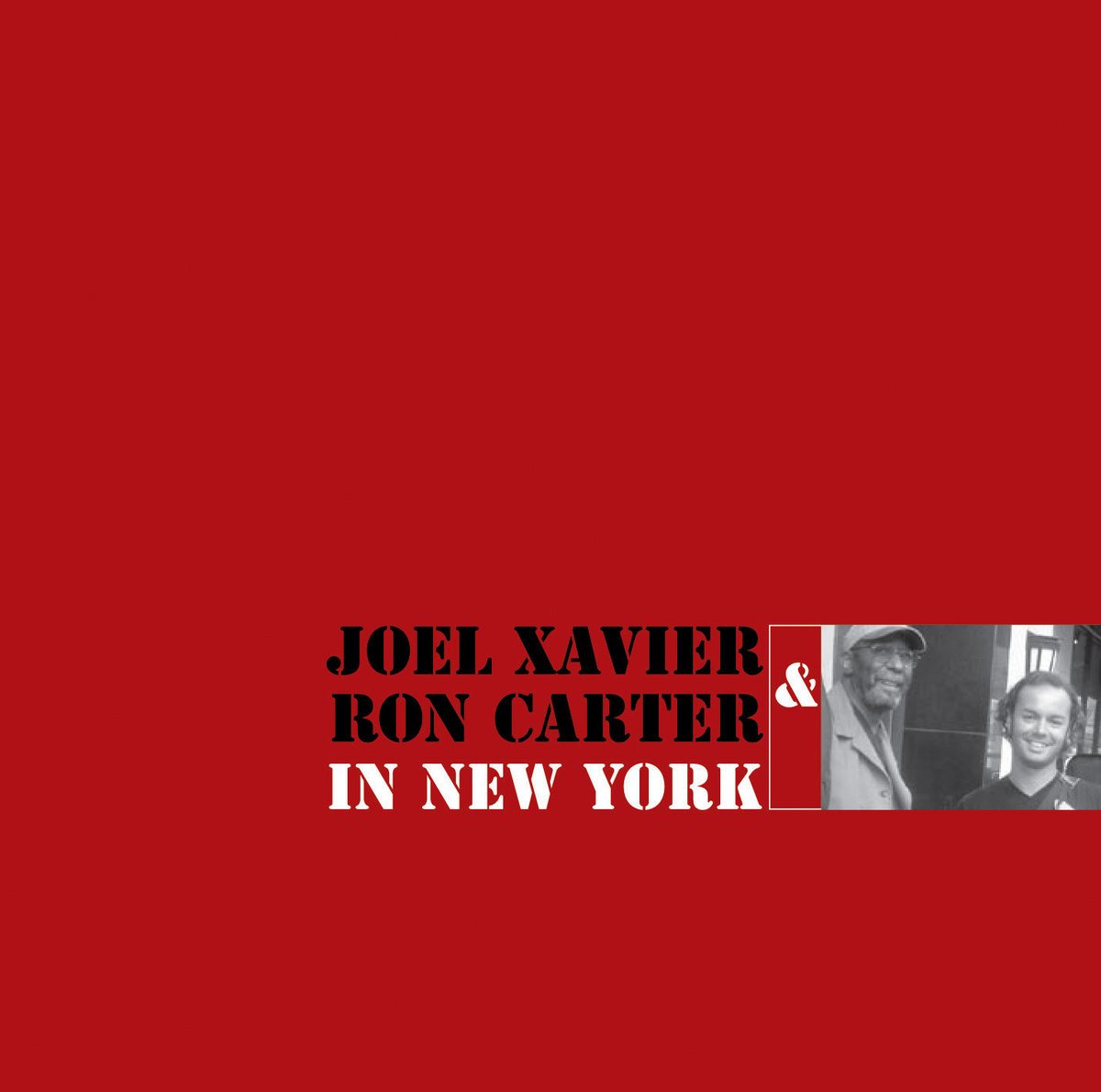
In New York, recorded in 2004, pairs Xavier's acoustic guitar with Ron Carter's double bass and nothing else: no drums, no piano, nine Xavier compositions worked out as pure duo. Carter had done this kind of spare, unhurried duet work before, most notably alongside guitarist Jim Hall on 1975's Concierto, and Latin rhythm was hardly foreign to him either, given his 1970s recordings with Airto Moreira. But the quietness here is its own thing. With no fadista's voice to carry the melody and no piano to fill the harmony, the two instruments simply talk: Xavier's lines doing the singing fado usually reserves for a throat, Carter's bass filling in everything else with the patience of a musician who has spent a career listening before playing.