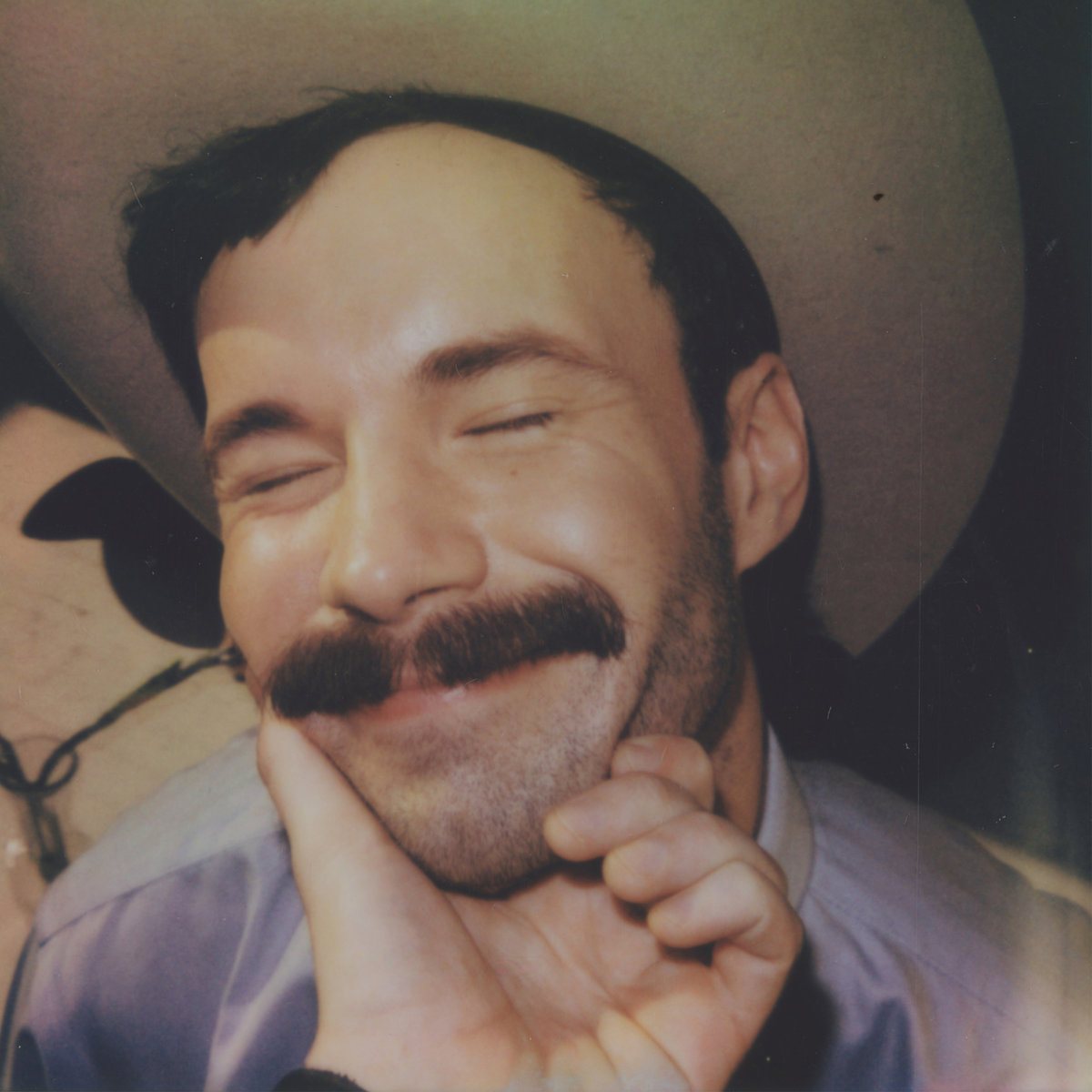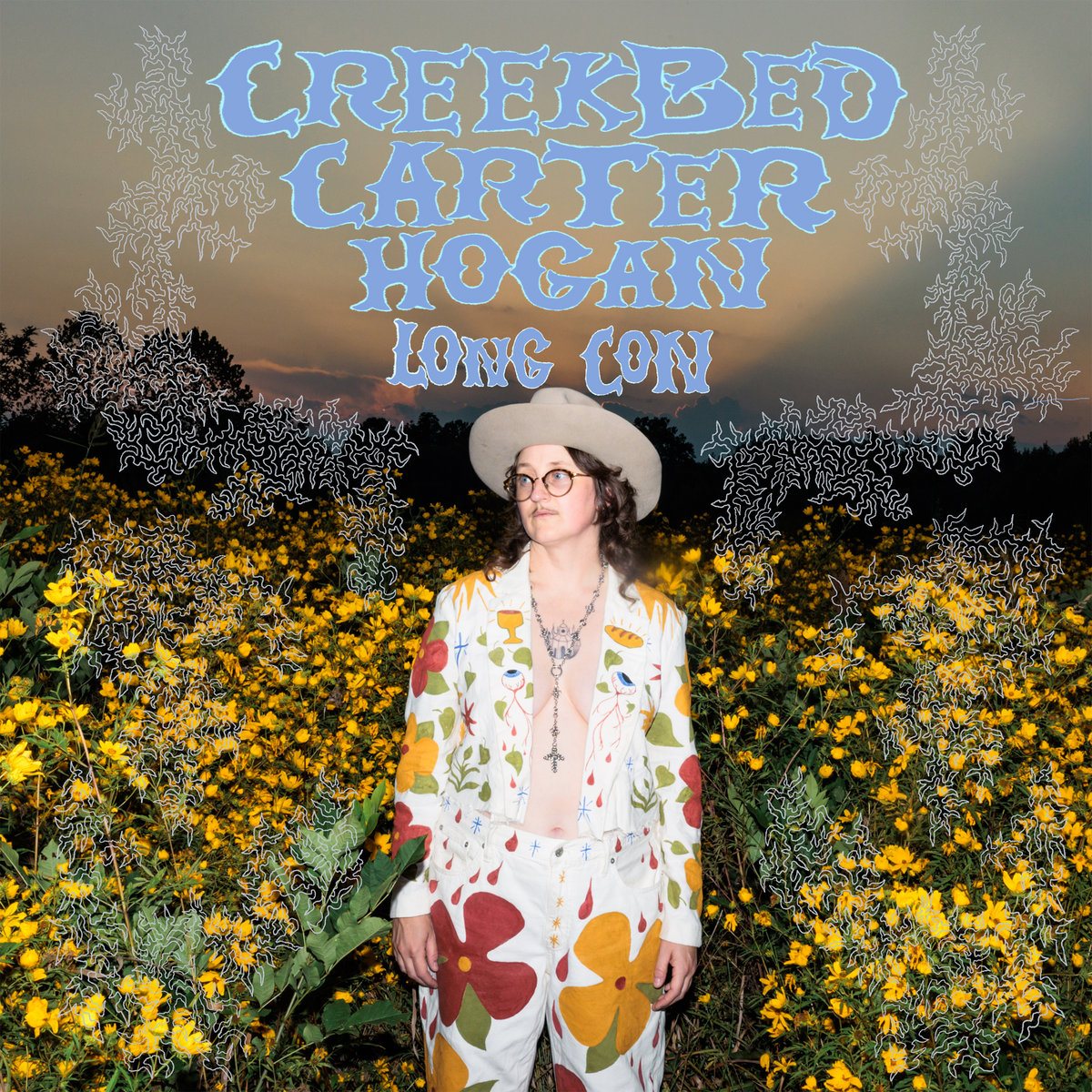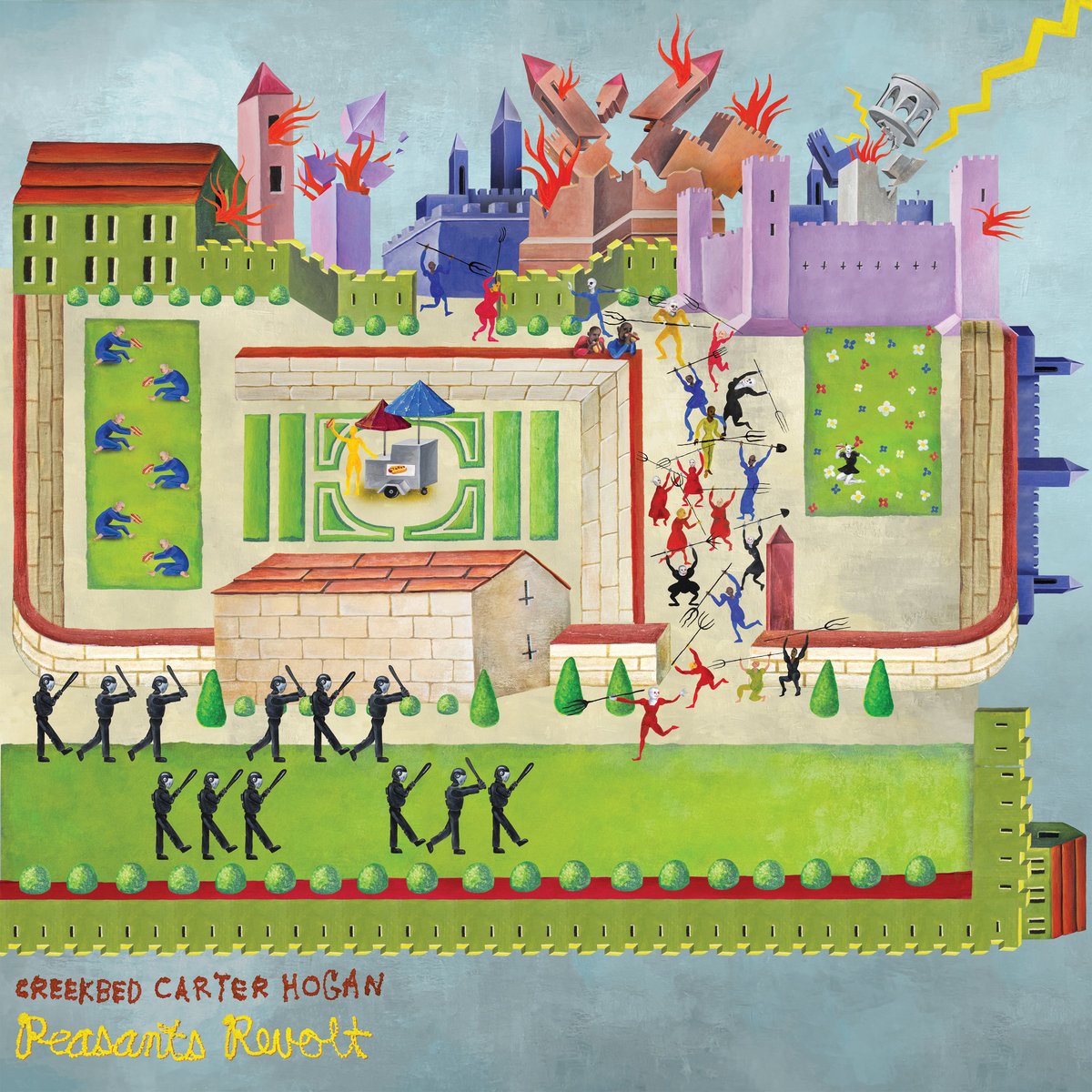
Carter Hogan has always split the difference between eras. Raised mostly in Austin and now settled in Saint Paul, they write songs that read like something excavated — medieval balladry, Reconstruction-era hymns, protest chants — then wired into a very current nervous system. Their new record, Peasants Revolt, released this summer on Gar Hole Records, is the clearest statement yet of that excavation: ten songs that travel from the Haitian Revolution to a Minneapolis hot dog stand without losing their footing.
The instrumentation gives the game away before the lyrics do. Banjo and pedal steel sit next to baroque organ and cello, arranged by a rotating cast of a dozen players that includes Britton Beisenherz, who co-produced and plays piano and organ, and Nora Predey on bass and baritone guitar. Drummer Sarah Schultz, on loan from the dream-pop band Sun June, keeps even the most ornate arrangements from floating away entirely. The result sits closer to a chamber ensemble reading old broadsides than to anything Nashville radio would recognize, though country remains the nearest word for it.
What makes Hogan's version of that tradition distinctive is how literally they take the word revolt. Peasants Revolt borrows its title from the 1381 English uprising and draws a line from it through the Haitian Revolution to the union hall. Hogan organizes with Twin Cities United Performers, a musicians' advocacy group, and has called a 2026 set of labor and union songs performed for roughly two hundred and fifty people at Minneapolis's Cedar Cultural Center the single most important performance of their life. That politics never curdles into slogan on record; the album's most audacious move is smuggling its apocalypse in through a hot dog stand, using cheap American food as a small, absurd mercy against the collapse happening everywhere else in the songs.
Hogan has pointed to Fernando A. Flores's novel Brother Brontë and the historian Julius S. Scott's The Common Wind as source material, alongside a songwriting lineage running from Hazel Dickens and Bobbie Gentry through Gillian Welch's stranger turns. The clearest debt, though, is to Mary Gauthier, whom Hogan has credited by name: "Mary Gauthier made my life as a trans country artist possible." That is not a small claim, and Peasants Revolt earns it, treating trans survival and peasant uprising as chapters of the same long story, sung by someone who grew up on Mary Chapin Carpenter's empathy and later learned the genre had room for people like them too.
The album's featured vocalist, Jude Brothers, threads through several tracks, the kind of duet partnership that only sounds this unguarded after years of playing together. Alongside fiddler Beth Chrisman, cellist Lindsey Verrill, and woodwind players Hunter Prueger and Gabriela Torres, the band gives Hogan's history lessons a body you can dance to, or grieve to, depending on the track.