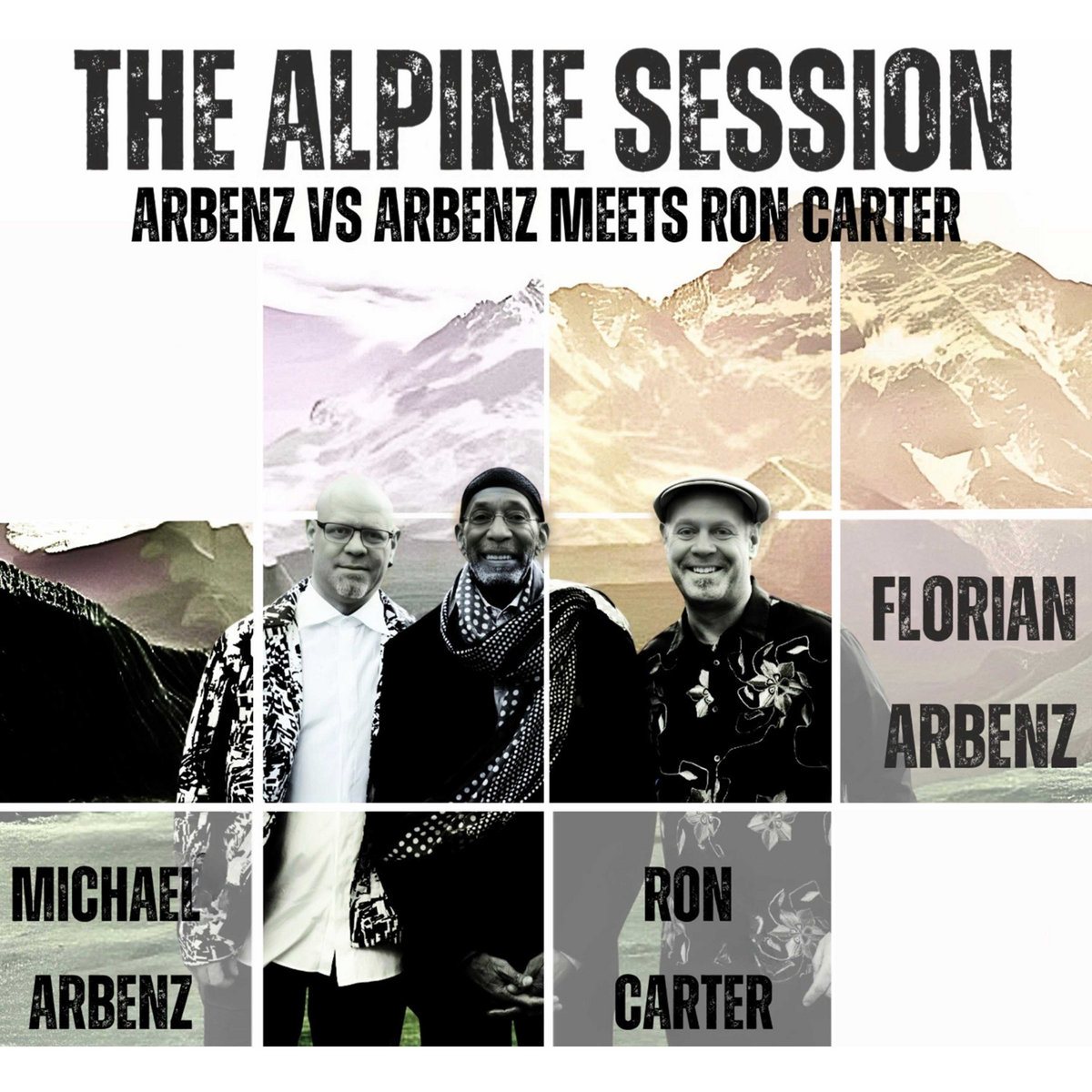
Florian Arbenz has been listening to Ron Carter since long before he could reasonably expect to share a studio with him.
The Basel-based drummer and his twin brother Michael, a pianist, grew up on the Miles Davis records Carter anchored through the 1960s, and built a good part of their own musical language out of copying his time feel off vinyl. On The Alpine Session, recorded on 16 March 2024 at Gabriel Recording and released the following February under the fuller title Arbenz vs. Arbenz Meets Ron Carter, that distance closes to the width of a room.
Carter was 86 when the tape rolled, and remains, by any reasonable count, the most recorded bassist in jazz history, past two thousand sessions across six decades. He is not an easy figure to record alongside without sounding like a tribute act.
The Arbenz brothers avoid that by keeping the material close to home rather than reaching for spectacle. Six tracks make up the session: three originals from Florian, one from Michael, and two standards, Duke Ellington's "It Don't Mean a Thing" and Jerome Kern's "All the Things You Are," pulled from inside the tradition the brothers were raised on rather than staged around it.
Together, Florian and Michael are better known as two-thirds of Vein, the Basel piano trio they have led since 2006 with bassist Thomas Lähns, a group whose past guests include Greg Osby, David Liebman and Andy Sheppard, and whose recent projects have stretched as far as a big-band record with Sweden's Norrbotten Big Band. The Alpine Session pulls the unit apart for one session, with Carter stepping into Lähns's chair rather than joining the working band.
What holds the record together is nerve rather than deference.
Michael's piano stays inside the standards' harmony without simply restating it, and Florian's drumming leaves Carter the kind of open, unhurried time he has spent decades filling exactly how he wants, rather than crowding him with tribute. Neither brother plays smaller for the company.
Recorded in the Alps rather than a studio nearer their usual circuit, the session reads as occasional music rather than the start of a new working group, and it doesn't need to be more than that. For two musicians who built a sound on a handful of Ron Carter basslines, an afternoon in the same room as him is already the point.