Bill Dixon spent decades teaching trumpet players how not to play the trumpet the way anyone had taught him. In June 2007, at eighty-one, he put seventeen of them in a room at a former synagogue on the Lower East Side and asked them to say something about a genocide.
Dixon's own route to the instrument was late and strange. Raised in Harlem from the age of nine after his family left Nantucket, he served in the army in Germany in the mid-1940s and only began formal training afterwards, on the GI Bill, alongside painting classes he took just as seriously. He worked at the United Nations through the late 1950s, founding a UN Jazz Society there of all places, before organising the October Revolution in Jazz at Manhattan's Cellar Café in 1964 and co-founding the Jazz Composers Guild the same year. From 1968 he taught at Bennington College in Vermont, where he built the Black Music Division and stayed for nearly three decades.
On his own horn, Dixon avoided almost everything trumpet players are praised for. He worked the bottom of the instrument's range with half-valved breath rather than embouchure, used mutes sparingly, and let electronic delay smear his lines into something closer to a held tone than a phrase. It made him a strange fit for hard bop and an obvious one for the sparse, patient writing he built his later ensembles around.
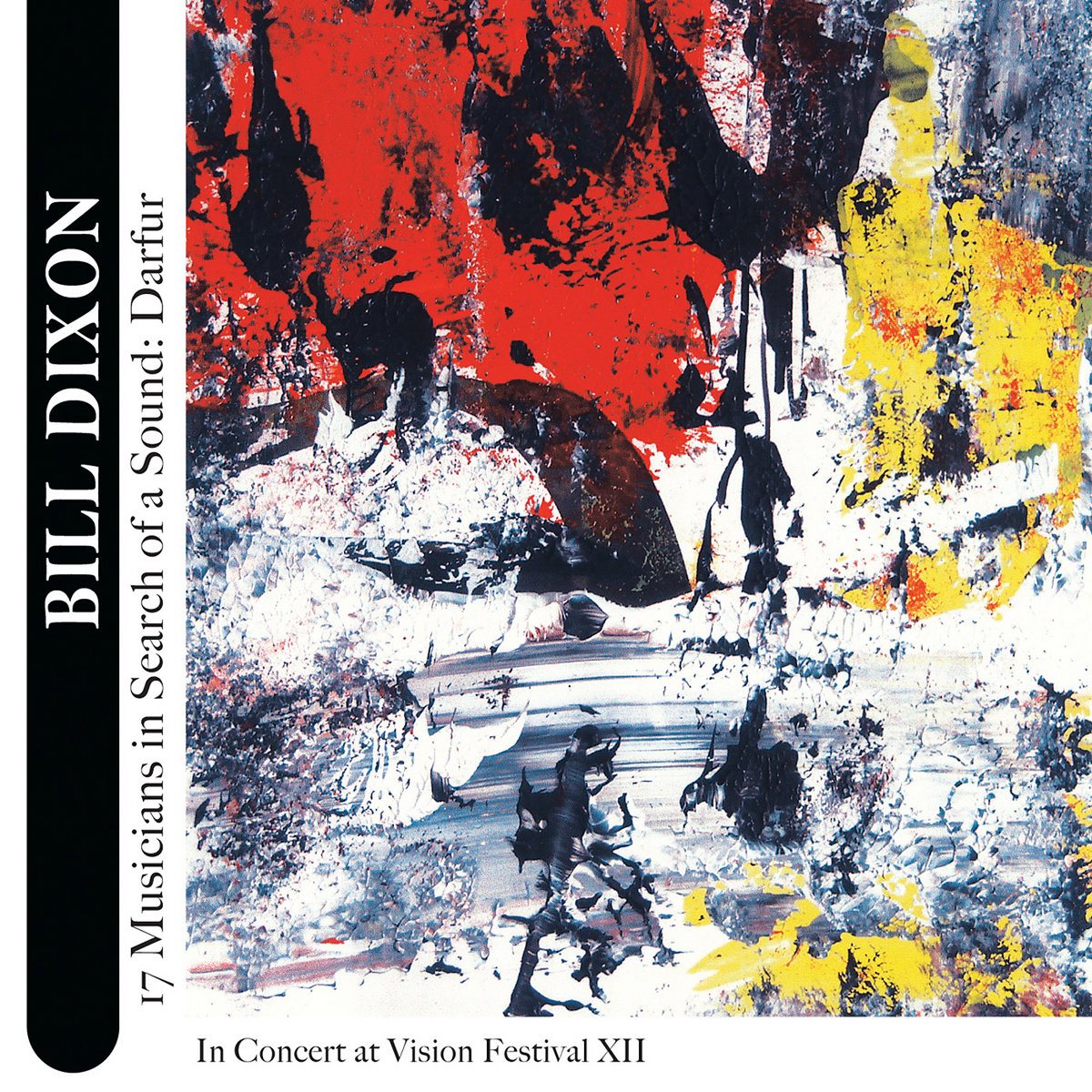
17 Musicians in Search of a Sound: Darfur was commissioned by Arts for Art and recorded live at the Angel Orensanz Center during that year's Vision Festival, released the following year on AUM Fidelity. The personnel reads like a register of the New York scene Dixon had helped build over four decades: Graham Haynes, Stephen Haynes and Taylor Ho Bynum on brass alongside Steve Swell and Joseph Daley, reed players including J.D. Parran and Andrew Raffo Dewar, two drummers in Jackson Krall and Warren Smith. Dixon's writing leaves enough space in the thirteen-part suite that Karen Borca's bassoon can cut straight through the ensemble rather than get buried in it.
On the title track she gets the record's one unguarded moment of release, soaring over the band in a way bassoonists are rarely asked to.
The music expands and drops away without warning, refusing to settle into either grief or resolution. That looks deliberate. A commission written for an atrocity that was still under way has nowhere tidy to arrive, and Dixon's charts keep proving it, cutting a crescendo off just as it gathers, or stranding all seventeen players on a single suspended tone rather than a resolving chord. He gives no one permission to feel that anything has been settled, because by June 2007 nothing had been.