Jeremy Michael Ward died on 25 May 2003, a month before the release of De-Loused in the Comatorium, the Mars Volta debut he had helped build almost entirely from behind a mixing desk. He was 27, and he had never played a conventional instrument on the record that made him essential to it.
He left one more album behind.
Ward was Jim Ward's cousin, a fixture on El Paso's edges of the At the Drive-In scene before that band split in 2001. When Cedric Bixler-Zavala and Omar Rodríguez-López regrouped as De Facto and then The Mars Volta, they brought him in not as a musician in the ordinary sense but as what the credits called a sound manipulator: melodica, delay pedals, live vocal processing, the man routing everything through effects until it barely resembled its source. It is Ward's fingerprints, as much as anyone's guitar, that make De-Loused sound the way it does.
Rodríguez-López has spent his career describing effects pedals as "allies in my war against the guitar," which says a great deal about a man who plays left-handed, cites Frank Zappa and Robert Fripp as his clearest influences, and has released, at a rate few guitarists would attempt, somewhere north of fifty solo records since 2004. Most of them are still guitar records, however far he bends the instrument out of shape.
This one is not.
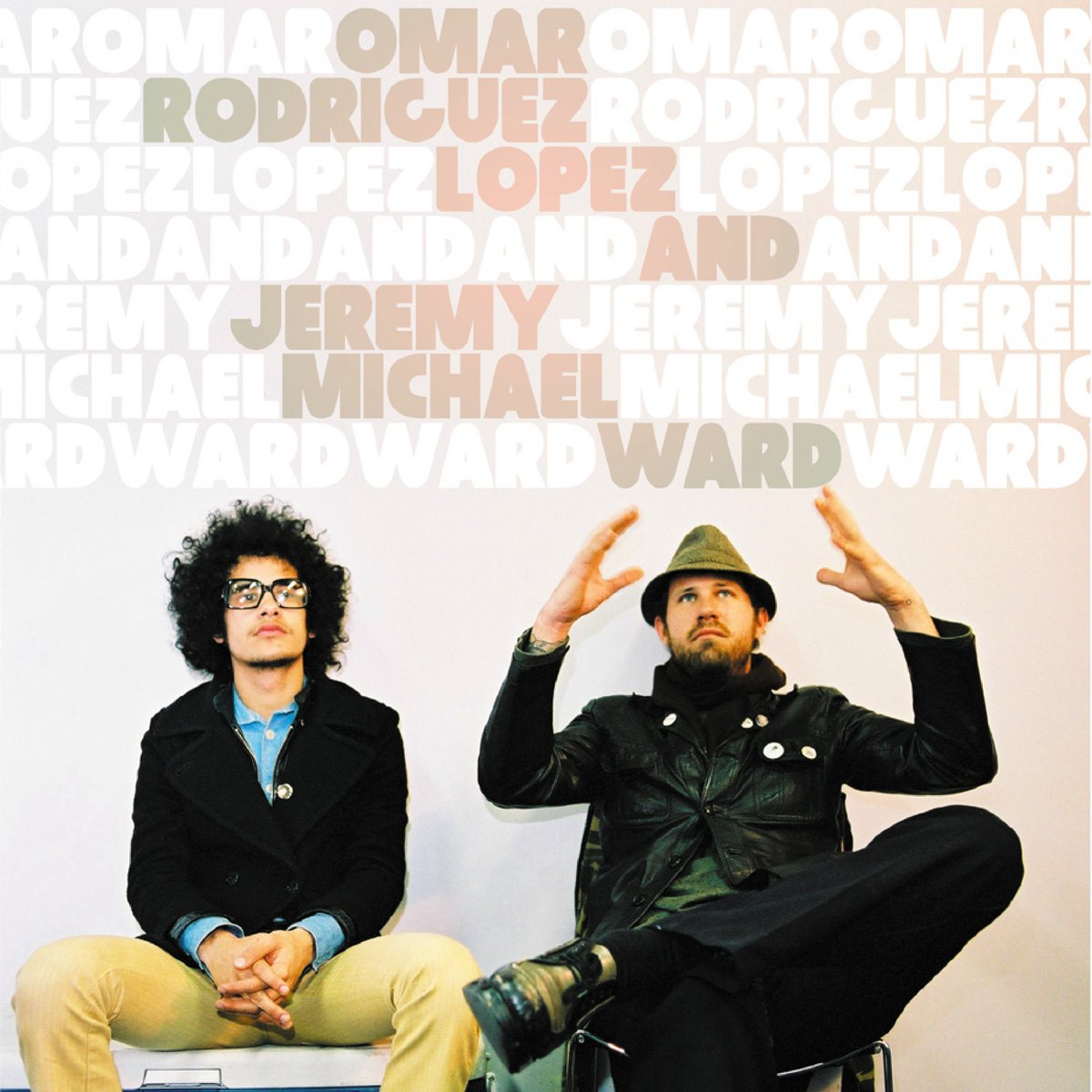
Omar Rodríguez-López & Jeremy Michael Ward, recorded with Ward before his death and released five years after it, is Rodríguez-López's first record built entirely without one. "Salvo" runs fourteen minutes and sounds like tuning a radio between stations, static resolving into tone and back again. "Swell the Ranks" locates something closer to a melody, briefly, before it gets processed into unrecognisable shape. "Untitled" could be a leaf blower pressed against a failing microphone; there is no way to be certain, and that uncertainty is the point.
It sits closer to the tape-collage tradition of musique concrète than to anything built for a chillout room, nearer to noise than to atmosphere for its own sake.
Heard against the operatic, riff-driven catalogue Rodríguez-López has built with Bixler-Zavala, the record plays less like a detour than a confession: that the guitar was never really the instrument doing the experimenting, and that Ward, working the desk rather than the fretboard, had been the more radical presence in the room all along. It is a difficult, uncommercial listen, released on Rodríguez-López's own label with none of the ceremony that usually surrounds a posthumous tribute. That absence of ceremony feels correct. Ward manipulated other people's sound for a living. Here, finally, the sound is entirely his own.