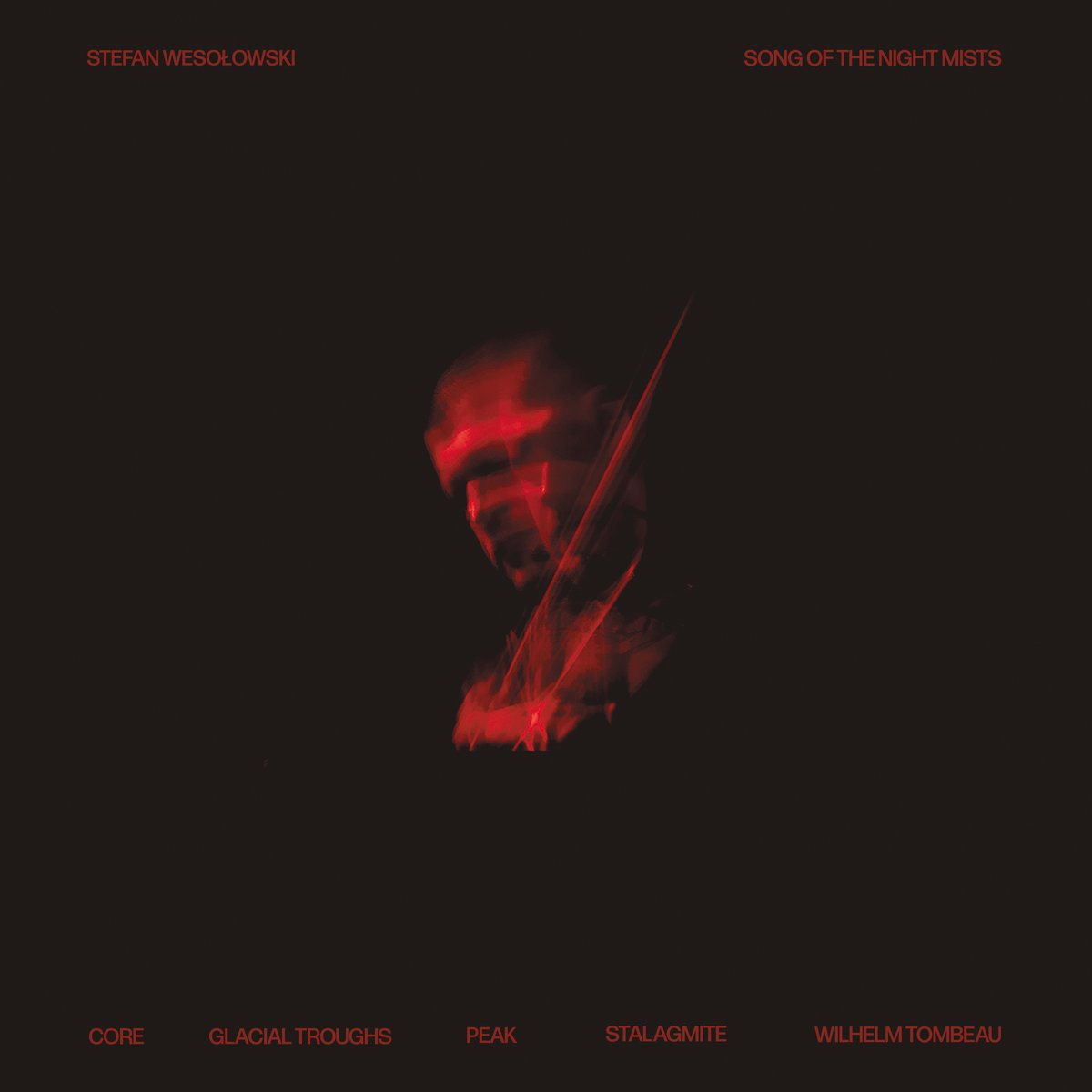
Song of the Night Mists began as a favour. Wesolowski's friend Daniel Wahl worked for Tatra National Park and asked him to write something for an exhibition; Wesolowski went up into the mountains, started writing, and knew within days that the piece would outgrow the gallery it was meant for.
It has. The record that resulted closes a trilogy the composer began in 2013 with Liebestod and continued in 2017 with Rite of the End, two records built around love, death and decay that leaned heavily on Wagner. This one changes the reference points but not the ambition: Wesolowski has said the album is about a world that existed, and was beautiful, for the overwhelming majority of its history without any people in it at all.
That is a large claim for five tracks to carry, and Wesolowski backs it with recordings made in the mountains themselves rather than studio effects standing in for them: cracking ice, streams, footsteps in snow and, on one occasion, an actual avalanche. He sets this against organ recorded at Saint Nicholas' Basilica in Gdansk, plays violin and double bass himself, and runs instruments through a Roland Jupiter-8 and a Soviet-built Polivoks synthesiser via a vintage Roland Space Echo tape unit.
The mountains bring their own history into the record. Wesolowski samples Karol Szymanowski, the composer who spent the 1920s in Zakopane absorbing highland folk music into his own scores, and takes the album's title from a poem about the Tatras by Kazimierz Przerwa-Tetmajer. It is a deliberate lineage: Szymanowski went to the mountains to find a Polish voice distinct from Vienna and Paris; Wesolowski goes there to find one distinct from the human voice altogether.
Trained as a violinist, Wesolowski studied at the Academie Musicale de Villecroze before turning composer, and has spent the years since scoring film as often as concert halls; his score for the Marlon Brando documentary Listen to Me Marlon, itself a finalist on the Academy's documentary shortlist, remains one of his best-known film credits, and Rite of the End was picked out as one of the more striking live sets at SXSW in 2019.
His writing partner on several earlier records, the composer Jacaszek, is absent here; the closest thing to a duet is with his brother Piotr, credited on organ.
Wesolowski has been fusing this vocabulary of strings, tape and modified electronics since Kompleta in 2008, a setting of breviary prayers for string quartet and tape that first suggested a composer more interested in atmosphere than resolution.
Where the earlier records reached for catastrophe, this one settles for indifference, which is the harder mood to sustain and, over five tracks, the more convincing one.