Eyvind Kang’s music rarely announces where one tradition ends and another begins. On The Narrow Garden, strings, winds, percussion and voice occupy the same terrain without being flattened into fusion. The pleasure is in hearing the borders remain visible while the music keeps crossing them.
Kang has spent his career in precisely that kind of traffic. Born in Corvallis, Oregon, in 1971 and raised across several places in North America, he studied at Cornish College of the Arts and developed viola into his principal instrument. His work as a player and arranger reaches from Bill Frisell, Laurie Anderson and John Zorn to Secret Chiefs 3, while his own records have appeared on labels including Tzadik, Ipecac, Abduction and Ideologic Organ.
That range is not simply a résumé of eclectic associations. Kang has studied North Indian classical music with violinist N. Rajam and Persian classical music with Hossein Omoumi, alongside formative work with teachers including Michael White, Julian Priester, Jarrad Powell and Janice Giteck. His compositions treat musical systems as things with histories and internal logic, not as a cabinet of exotic colours.
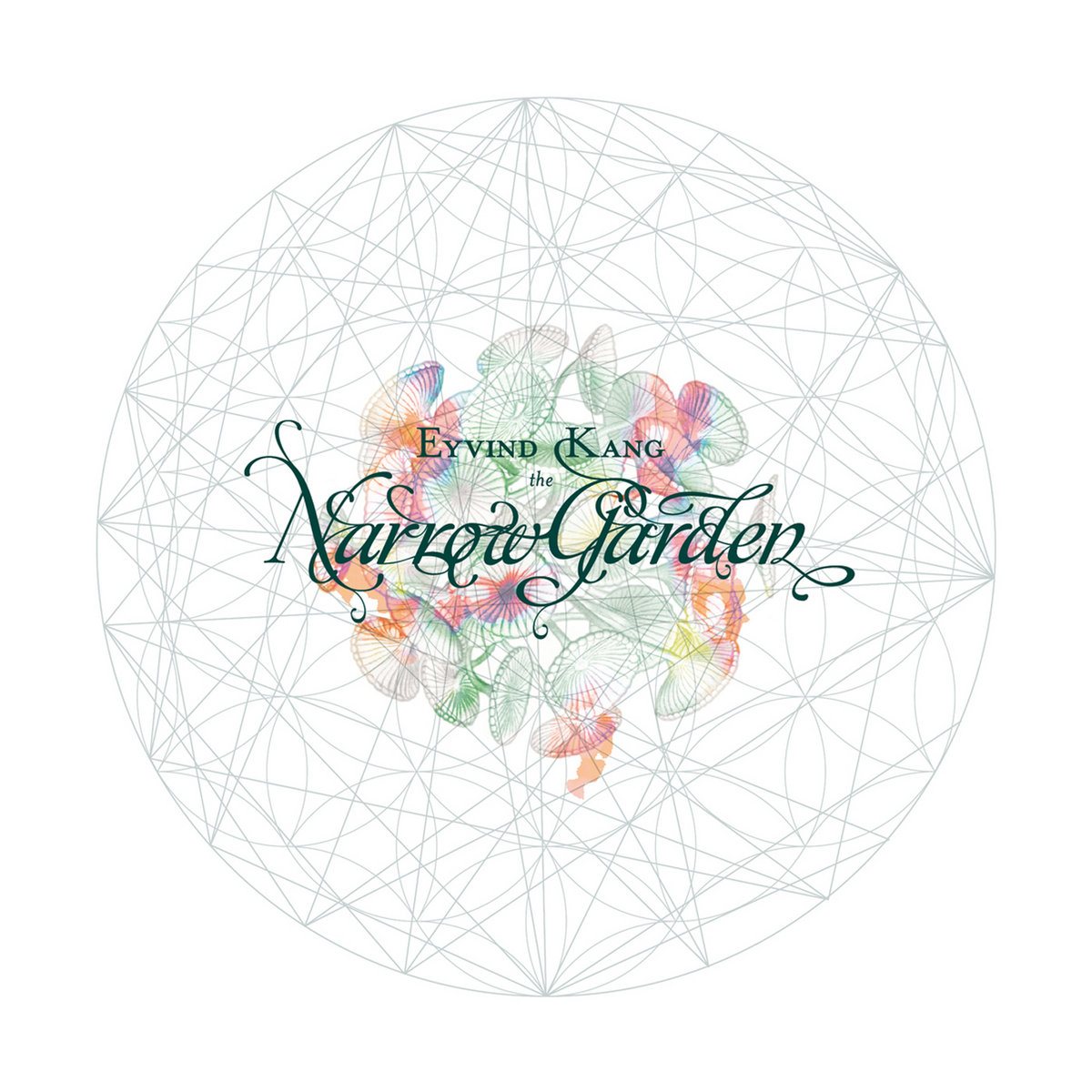
The Narrow Garden, released by Ipecac in 2012, makes that discipline unusually sensual. The seven pieces involve an ensemble of more than 30 musicians: strings alongside flute, ney, French horn, oboe, bassoon, harp, guitar, bass and percussion, with Jessika Kenney on voice. Trevor Dunn plays bass; violinist Jenny Scheinman is among the string players.
The scale could have produced spectacle. Instead, Kang keeps finding intimacy.
Forest Sama’i establishes the record’s preference for motion without obvious destination, while Usnea lets colour and sustained tones gather patiently around its centre. The title piece feels less composed in blocks than cultivated, instrumental lines entering and withdrawing as if the arrangement were responding to changes in light. At the other end of the record, Invisus Natalis stretches past nine minutes and gives Kang enough room to let consonance and unease coexist.
Voice is crucial to that atmosphere. Kang’s ongoing work with Kenney has repeatedly joined close vocal writing to strings, installation, orchestral composition and traditions extending beyond standard Western chamber practice. Here, the human voice does not sit above the ensemble as narrator; it is another material inside it.
That is what makes The Narrow Garden endure beyond its unusual instrumentation. Kang does not ask the listener to admire how many languages he can place in one score. He asks what happens when those languages are allowed to retain their grain, then makes a garden out of the tension between them.