In 1487, a Dominican friar named Heinrich Kramer published the book that would arm two centuries of witch trials across Europe. He signed it with the Latin form of his name, Henricus Institor. The book was the Malleus Maleficarum, the Hammer of Witches, and its author has been dead for nearly five hundred years.
Beneath Moonlight has decided he isn't finished.
The project is a single member of Ordo Vampyr Orientis, a shadowed circle of vampiric black metal acts whose names all share the initials B.M.: Bad Manor, Bat Magic, Banshee Moon, Beastial Majesty and now Beneath Moonlight, released as a self-titled debut EP on 20 December 2024. Six tracks, twenty-odd minutes, and a premise borrowed wholesale from Kramer's own biography, twisted into folklore. Here, Institor is cursed with lycanthropy partway through his career as an inquisitor, and the record tracks his turn from persecutor of the occult to practitioner of it. The opening track is titled after his book. The closing one, a waltz, is titled after an invented sequel to it: Malleus Lycanthroporum, the hammer of werewolves.
It's a neat piece of theft, taking the era's most notorious witch-hunter and making him the monster he spent his career inventing.
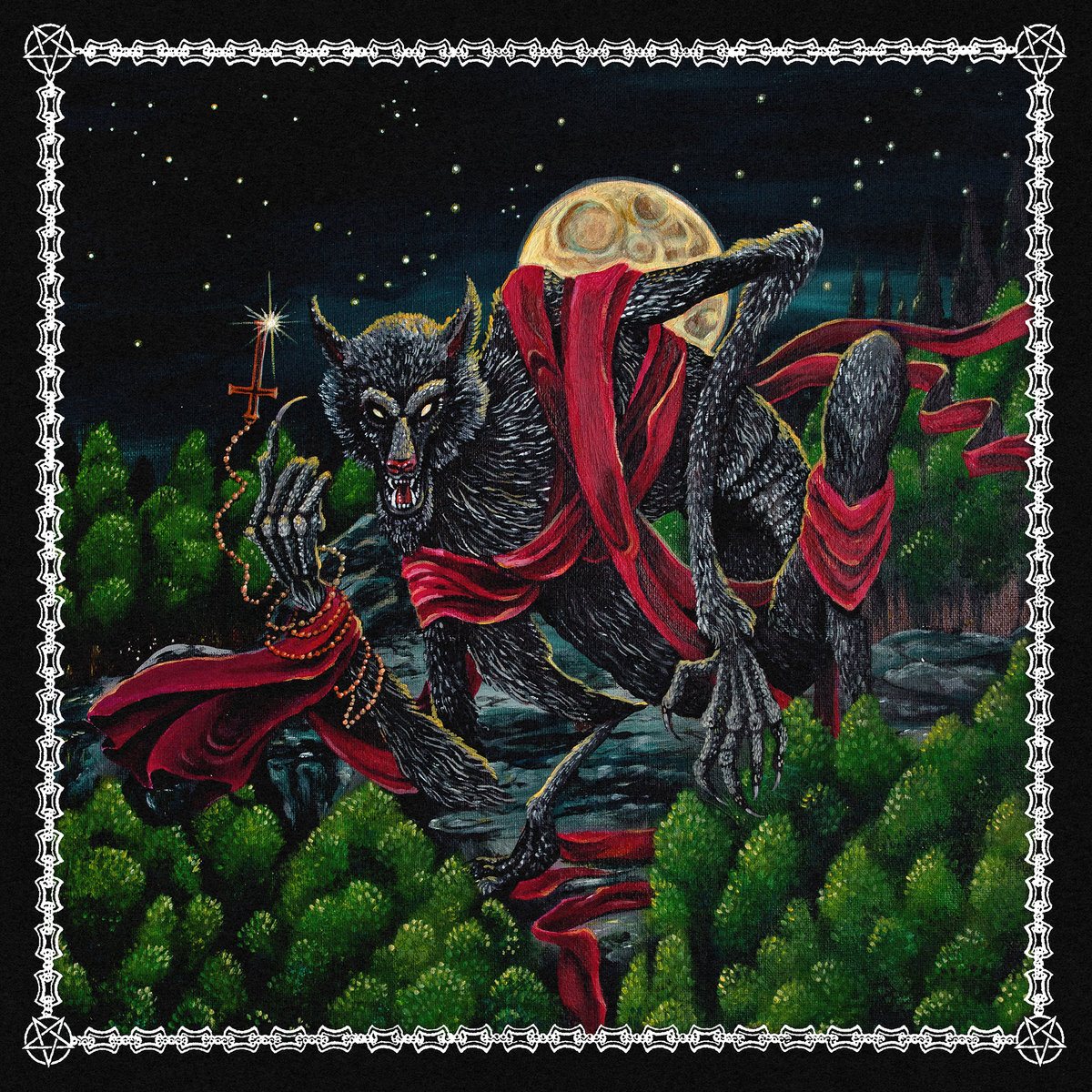
Calling this vampiric black metal is a stretch, and Beneath Moonlight doesn't pretend otherwise. Versipellis, the Latin word for shapeshifter, sits at the record's centre, and the werewolf iconography runs from the cover art to the song titles. But the genre it's filed under has always had room for the vourdalak, the Slavic vampire that folklore twins with the wolf, and the wider Ordo Vampyr Orientis catalogue treats the distinction as decorative rather than structural.
Structurally, the EP leans on a piano that does as much narrative work as the guitars, threading through the riffing rather than decorating it, tagged by the project itself as pianistic black metal. The vocals sit somewhere between ritual and ranting, closer to a man reciting a confession than one delivering a sermon, which suits a record about a zealot losing his own argument.
Nobody involved has put a name to it, and that's clearly the point. Ordo Vampyr Orientis keeps its membership unlisted across every one of its projects, letting the initials do the branding instead of any single musician's reputation. For a record built around a historical figure who signed his own name to a book that got thousands of women killed, the anonymity reads less like modesty than like penance.