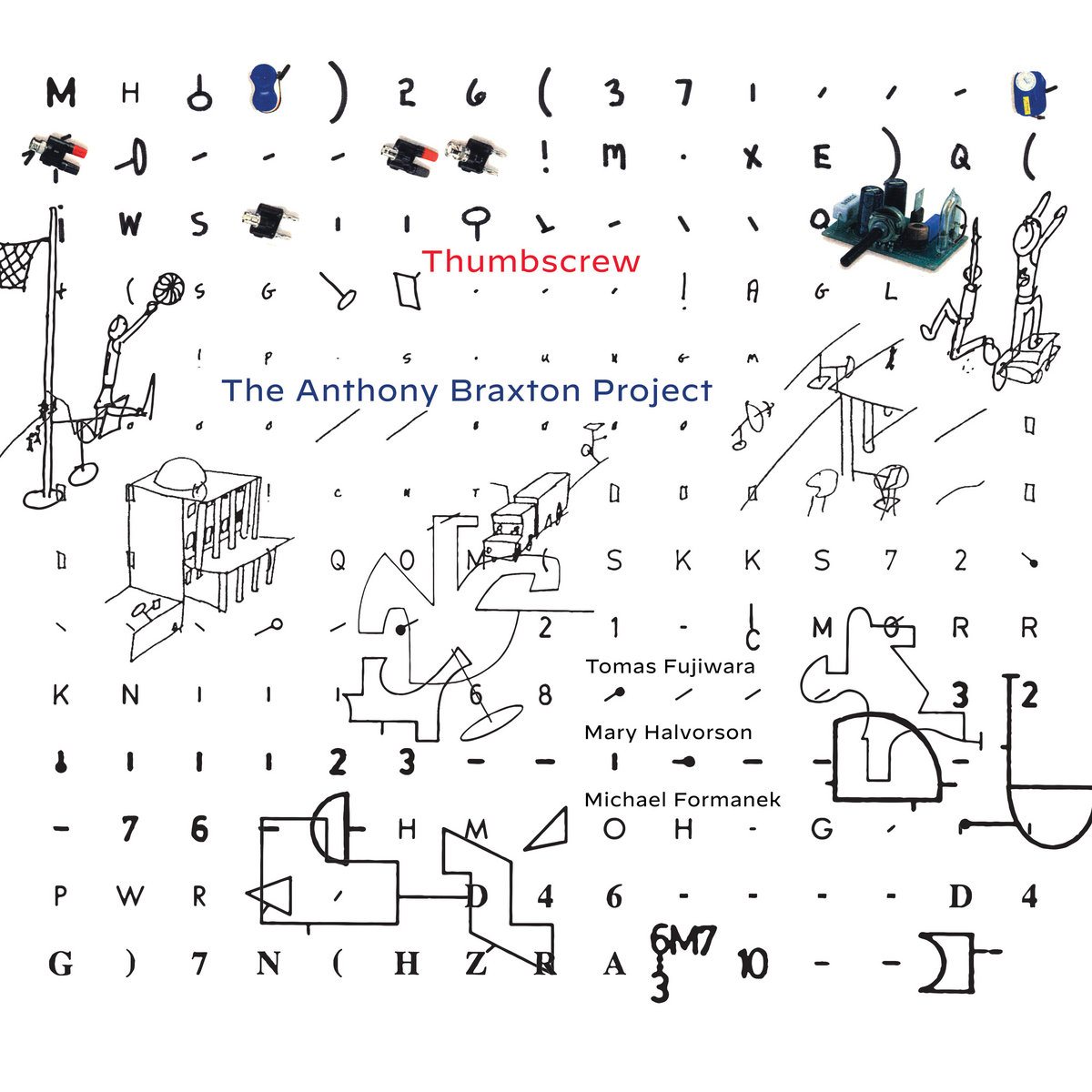
Anthony Braxton's archive at the Tri-Centric Foundation in New Haven runs to thousands of compositions, some existing only as graphic scores that look more like architectural drawings than sheet music. In 2020, marking Braxton's seventy-fifth birthday, the trio Thumbscrew went looking through it for pieces that might survive being played by guitar, bass and drums alone.
Braxton, a saxophonist and composer who has been building his own numbered system of composition since the late 1960s, won a MacArthur Fellowship in 1994 and has spent decades treating jazz, contemporary classical writing and pure invention as the same discipline. His catalogue is enormous and famously unsentimental about titles: pieces are identified by number, not name.
The Anthony Braxton Project, released that July on Cuneiform Records, is not a tribute album in the ordinary sense. Guitarist Mary Halvorson, bassist Michael Formanek and drummer Tomas Fujiwara, who also plays vibraphone here, spent a month-long residency working through eleven pieces, most of them early Braxton compositions that had rarely or never been recorded before.
The connection runs deeper than admiration. Halvorson studied under Braxton at Wesleyan University in the early 2000s, sitting in ensembles he led there as a professor, and his insistence that a score is a starting point rather than an instruction has shaped the way she plays ever since.
That lesson is the whole record.
Thumbscrew treat each piece as raw material for their own group logic rather than a puzzle to be solved correctly. Composition No. 14 appears three times across the album, once centred on guitar, once on drums, once on bass, each version pulling a different structure from the same source. Elsewhere, dense contrapuntal writing gets pulled apart into something closer to chamber improvisation, three musicians trading responsibility for rhythm, melody and harmony rather than sticking to fixed roles.
Halvorson has said that working with someone else's material changes the frame of mind the trio brings to improvising, and it shows: this is tighter and more contrapuntal than the freewheeling interplay of their own writing on earlier albums like Ours and Theirs, without losing the elasticity that has kept Thumbscrew, formed in 2012, going as the longest-running of Halvorson's ensembles.
It's a rare kind of tribute, one that treats its subject's originality as a challenge to be matched rather than a legacy to be preserved under glass.