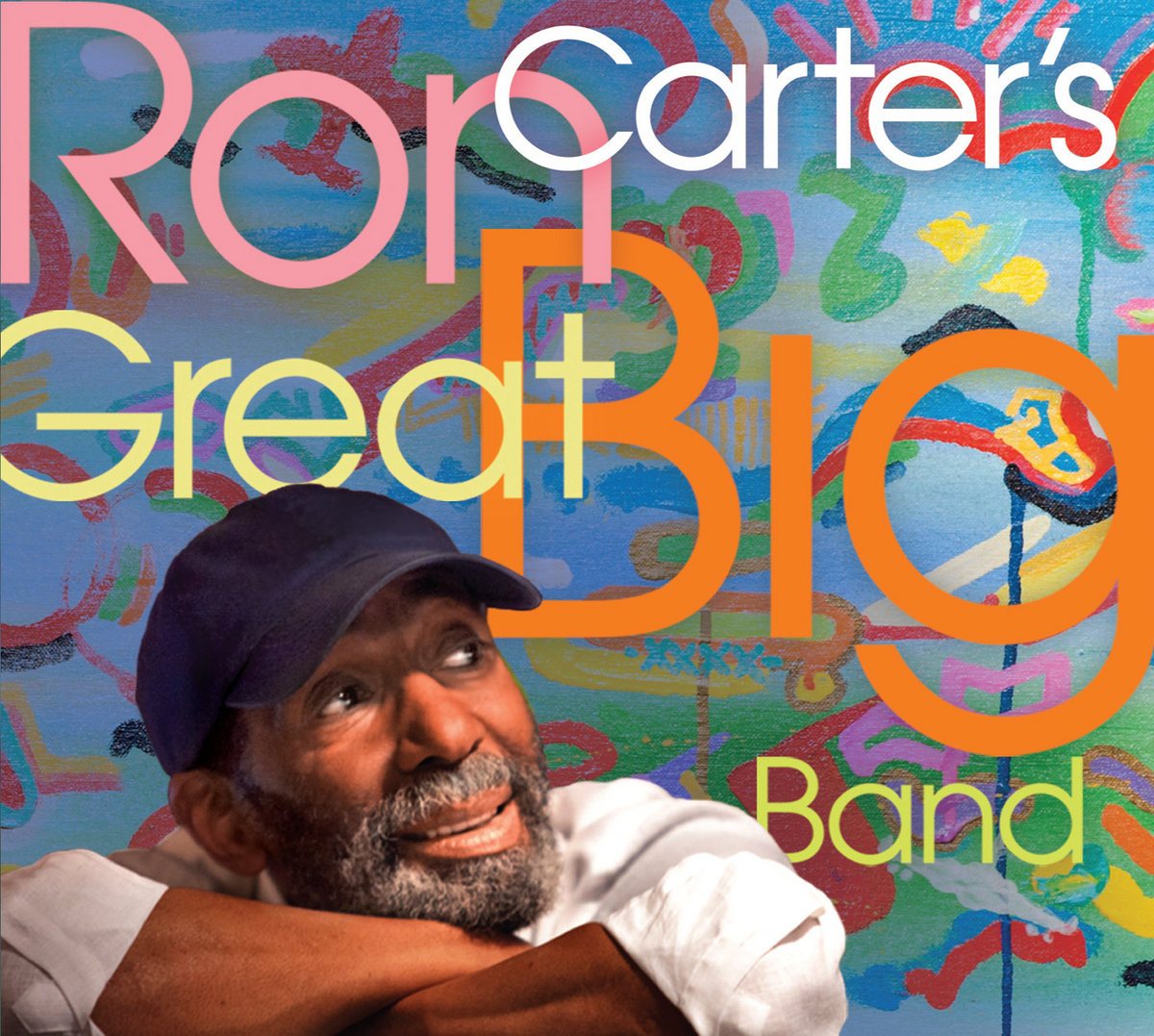
By the time Ron Carter finally stood in front of a big band, he had already played on more recordings than any other bassist in the history of jazz.
The tally, verified some years after this record, would run past two thousand sessions: Miles Davis's mid-1960s quintet, a decade of CTI dates, film scores, chamber ensembles built around cellos rather than horns. What he hadn't done, by his own account, was stand at the front of a seventeen-piece band and let it swing behind him. Ron Carter's Great Big Band, recorded across three days in June 2010 at Avatar Studios in New York, closes that gap.
Robert M. Freedman arranges and conducts, and his charts are built to let the size of the band be heard without burying the small group inside it. That small group is the one Carter had been touring with for years: Mulgrew Miller on piano, Lewis Nash on drums, Carter's own bass sitting low and unhurried under the reeds and brass rather than racing to keep pace with them.
The repertoire reads like a survey of the tradition he'd spent a career inside. Duke Ellington and Juan Tizol's 'Caravan' opens the record; Wayne Shorter's 'Footprints', a tune Carter had already helped define with Davis in the 1960s, returns here reharmonised for a full horn section. Dizzy Gillespie's 'Con Alma', Sonny Stitt's 'The Eternal Triangle', Gerry Mulligan's 'Line for Lyons' and John Lewis's 'The Golden Striker' sit alongside two Carter originals, 'Opus 1.5 (Theme for C.B.)' and 'Loose Change', which is as much of his own writing as he tends to put on record.
He was seventy-three when the tape rolled.
Carter has said plainly what took so long: having done, in his words, every conceivable recording under his own name, leading a big band was simply the one thing left. It's a modest way of framing a record this considered. Freedman's arrangements never let the ensemble's size become the point; the point stays Carter's time feel, the same steady, understated pulse that made him the rhythm section of choice for two generations of bandleaders, now given seventeen horns to carry instead of a rhythm trio.
It's a late-career project that plays like a summary rather than a departure, which may be exactly why it works.