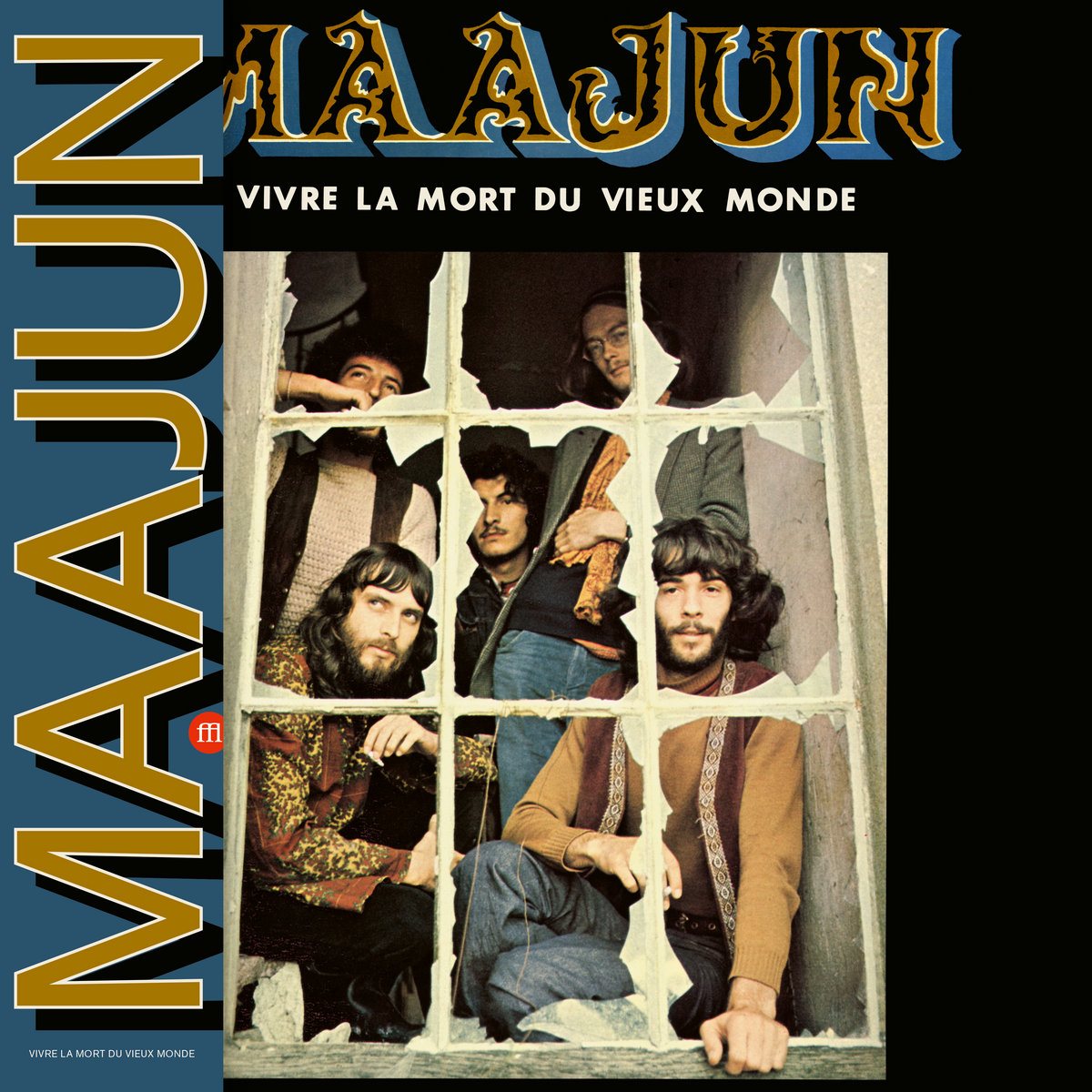
Vogue signed a handful of communal-living teenagers in 1970, paid for the studio time, and then tried to make the record vanish. That is the real story behind Vivre la Mort du Vieux Monde, not the psychedelic sleeve.
Maajun formed in the summer of that year around Jean-Louis, Cyril, Jean-Pierre and Alain, four multi-instrumentalists who lived together and treated the arrangement as a working method rather than a lifestyle statement. Guitarist Roger joined soon after, and the poet Gérald Escot Bocanegra, drawing on Rimbaud and Lautréamont, supplied lyrics sharp enough to alarm the very executives who had commissioned them.
Vogue heard the finished tapes and balked.
The label shelved the record, reportedly stunned by how subversive and iconoclastic it turned out to be, and only relented after listeners to José Artur's Pop Club radio programme campaigned on the band's behalf. Even then, Vogue pressed a small run, distributed it badly, and let it disappear almost immediately after its early-1971 release.
The music earns the fuss. Across a dozen short tracks, five players pass instruments between them the way other bands pass round a bottle: guitar into dobro into banjo, tabla into vibraphone, harmonica into zither. Blues riffs get bent past recognition, closer in spirit to what Captain Beefheart was doing to the form in America than to anything most of their French contemporaries attempted, though Maajun hold onto a chorus and a vocal line even as the arrangement threatens to come apart underneath it. Titles like "Houba" and "Passage Clouté" sit alongside a three-part suite dominating the record's back half: "Comptine I," "La Longue Marche" and "Comptine II" swerve from a hard-rock charge into a solo accordion interlude and back out into a flute-led folk passage, with no signposting between sections and no interest in resolving the tension it creates.
It was the only record this line-up made. Two members left soon after release, and the group that remained regrouped under the respelled name Mahjun, moving gradually away from the folk-psych of the debut and toward a heavier jazz-rock sound across two albums for the Saravah label in 1973 and 1974, and further releases through the rest of the decade.
None of that later drift explains the pull of the original. Vivre la Mort du Vieux Monde is the sound of a band young enough, and communal enough, to hand a record label something it had no idea how to sell, then watch that same label do everything short of destroying the tapes to keep it from an audience. Souffle Continu's reissue gives the record the distribution it never had the first time round, half a century after Vogue tried to make sure nobody would hear it at all.