Jim Haynes likes decay. He has spent much of his career rusting things on purpose, letting acids, oxidation and electrical damage do the composing for him, and describing the results with a phrase he returns to often: I rust things.
Shortwave radio gave him a decay he did not have to manufacture.
Haynes, based in the San Francisco Bay Area, picked up his first portable shortwave set around 1998, a Grundig he paired with a MiniDisc recorder so he could catch transmissions on the move. Out past the edge of any city, away from the electrical noise of streetlights and substations, the signal cleared and the world came through: an American evangelist mid-sermon, a Spanish-language newscast, a Romanian lesson aimed at some absent student, Morse code ticking over from Estonia. He kept at it for over a decade, filling MiniDiscs in the car and on foot until the format itself became obsolete and he switched to digital in the summer of 2012.
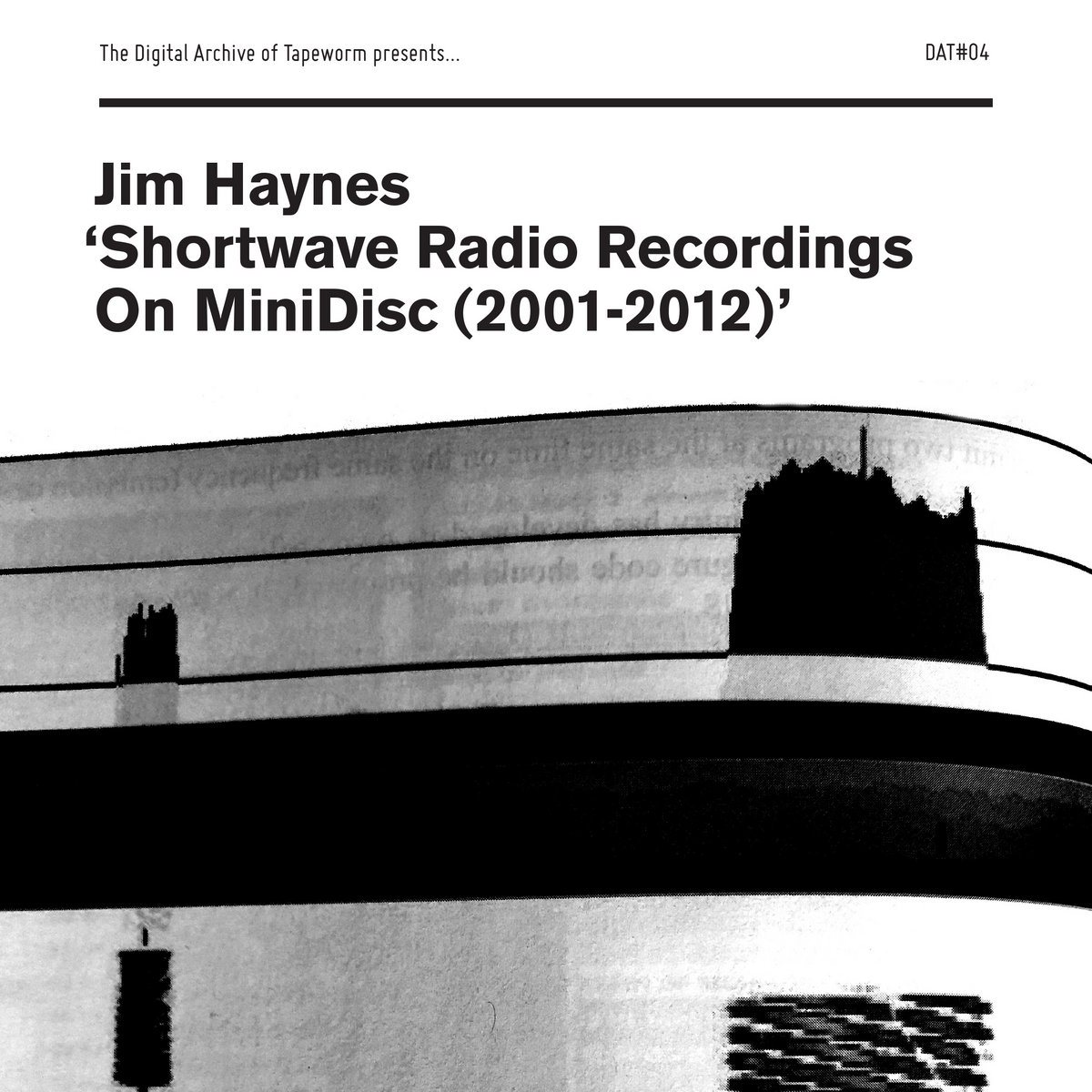
Shortwave Radio Recordings on MiniDisc (2001-2012) is the edit of that decade, first pressed as a hundred cassettes by the London tape label The Tapeworm in December 2020 before reaching Bandcamp through the label's digital arm, The Digital Archive of Tapeworm, the following February. The two sides move like a long drive with the dial left loose: after the Estonian code comes a ham operator, then the BBC World Service, then Radio Damascus, then Radio Vatican, one signal handed off to the next with no editorial comment beyond the order they arrived in.
That restraint is the point. Haynes has built a career, largely through his own label Helen Scarsdale Agency and his work directing the San Francisco sound-art nonprofit 23five, on processes that remove his hand from the outcome: corrosive chemistry, contact mics left on decaying structures, tape left to degrade. With Loren Chasse, as Coelacanth, he has recorded decomposing wood and waterlogged concrete. Shortwave radio simply supplied a different kind of found material, atmospheric rather than physical, and a different kind of entropy, one measured in interference rather than rust.
The record works because Haynes never tries to improve on what the radio gave him.
There is no narration, no crossfade drama, just the pleasure of the search itself, replicated at a better hit rate than anyone gets twisting a real dial. Listeners who know his sculptural and photographic work will recognise the same instinct here: put something unstable in front of a microphone and trust it to be more interesting than anything you could compose.