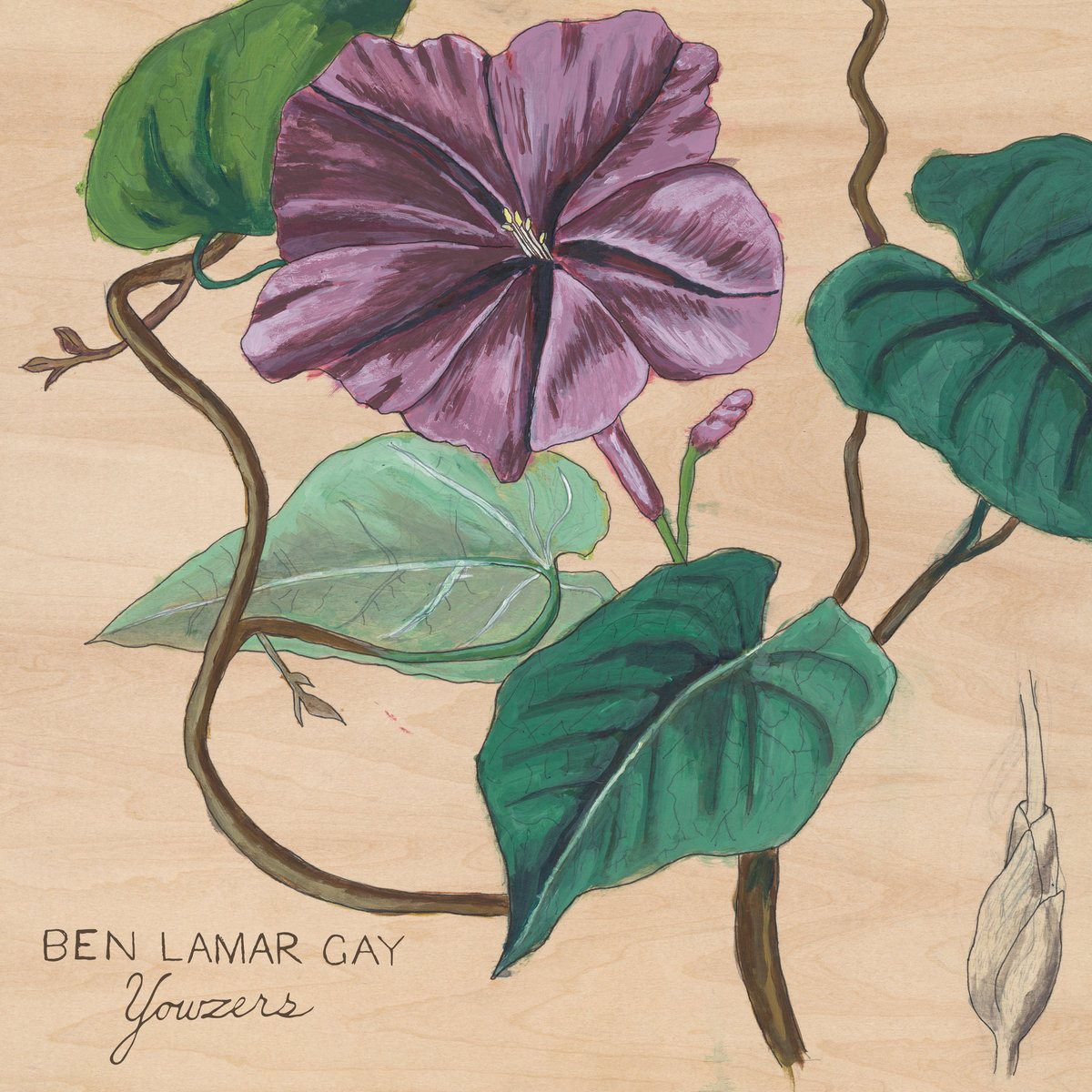
Ben LaMar Gay makes the cornet one voice among many. On Yowzers, it sits beside vocals, synth, bells, percussion and programming, with each sound allowed to change the direction of a song.
Released by International Anthem on 6 June 2025, Yowzers is rooted in Chicago but refuses the idea that a city's musical traditions should remain in separate rooms. Jazz, blues, folk practice, electronics and improvised music pass through the same pieces, sometimes so quickly that naming the genre becomes less useful than following the texture.
Gay's band is central to that mobility. Tommaso Moretti plays drums and percussion, Matthew Davis brings tuba and piano, and Will Faber moves between guitar and ngoni. Rob Frye adds flute and bass clarinet, while Ayanna Woods, Tramaine Parker and Ugochi Nwaogwugwu contribute voices. The record was made across sessions at Palisade Studios in December 2023 and International Anthem Studios between July and December 2024, with Gay producing and Dave Vettraino recording and mixing.
The personnel explains some of the colour, but not the looseness.
Gay writes songs that seem willing to expose their joins. A groove may establish itself and then acquire an awkward extra limb; a vocal line can feel intimate without becoming confessional theatre; acoustic timbres sit beside manipulated sound without the record making a spectacle of the contrast. His cornet is often concise rather than heroic, another voice inside the arrangement rather than a permanent centre.
That instinct runs through Gay's work in Chicago's creative-music community. His 2018 collection Downtown Castles Can Never Block the Sun gathered music recorded across years, while 2021's Open Arms to Open Us sharpened the sense of a composer treating songs, improvisation and studio construction as parts of the same practice. Yowzers feels less interested in reconciling those methods than in letting them coexist.
The AACM is an important part of the wider Chicago lineage around this music: not a genre but a culture of self-determined composition, experimentation and individual vocabulary. Gay's work belongs to that continuum without behaving like a period exercise. Tuba, ngoni, synth and programming are not there to demonstrate eclectic taste. They alter what the ensemble can do.
That is why Yowzers feels coherent even when its surfaces keep changing. Gay's real instrument may be the relationship between materials: how a brass phrase leans against a voice, how a folk timbre survives electronic treatment, how a rhythm can carry both play and abrasion.
The title sounds like an exclamation. The album earns it by staying curious about what might happen before the next one.