Mary Halvorson enrolled at Wesleyan University to study biology. She left with a guitar language nobody else was speaking, worked out largely by sitting in ensembles run by Anthony Braxton, who was teaching down the hall.
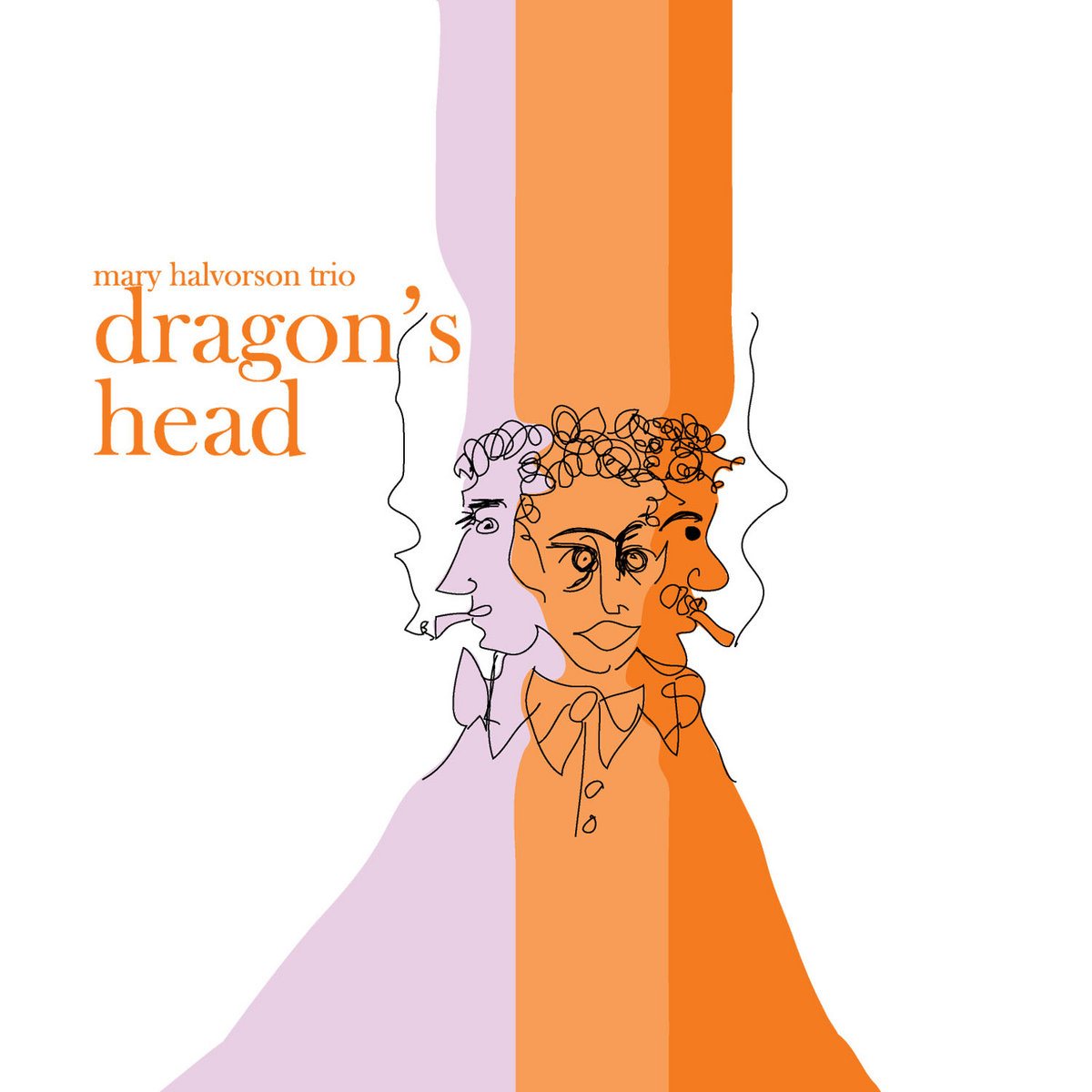
By 2002 she was in New York, studying further at the New School, where she still teaches. Six years later came Dragon's Head, her first album as a leader, released on Firehouse 12 with bassist John Hebert and drummer Ches Smith. It is the record where the guitarist people now argue about first properly turns up.
Nothing on it sounds like a demo for what was to come, which is unusual for a debut. The trio worries at spasmodic, stop-start rhythms and lurches between delicate arpeggios and passages that dissolve into pitch-bent noise, Halvorson's pedal work stretching a note until it seems to come loose from the note before it. Hebert and Smith do not accompany so much as argue back, their time elastic enough to make the whole thing feel improvised even where it isn't.
That elasticity is the throughline.
Since Dragon's Head, the trio has grown by careful stages rather than sudden expansion: a quintet with saxophonist Jon Irabagon and trumpeter Jonathan Finlayson, then a septet, then an octet that folded in Ingrid Laubrock, Jacob Garchik and the pedal steel player Susan Alcorn. Halvorson has described the logic as building blocks, starting small enough to trust everyone in the room before adding colour. The current sextet, Amaryllis, carries the same design; its most recent album, About Ghosts, added guest parts for saxophonists Immanuel Wilkins and Brian Settles.
Alongside the big-band arithmetic sit her duo records, with violist Jessica Pavone, guitarist Bill Frisell, pianist Sylvie Courvoisier and, released just this month, trumpeter Ambrose Akinmusire on Slo-Mo Neon Luminate Hoverings. Her song-based project Code Girl, fronted by singer Amirtha Kidambi, produced an unlikely coup on its second album, with the British singer Robert Wyatt appearing on three ballads, a rare later-career outing for him. She also keeps a chair in other people's bands, currently Myra Melford's Fire and Water and the Tomeka Reid Quartet, treating side work as a way of learning that has nothing to do with whose name is on the sleeve.
None of it would carry the same weight if the guitar playing itself weren't so singular. A 2019 MacArthur Fellowship, a run of DownBeat critics' poll wins for best guitarist stretching back to 2017, and a discography now too large to summarise all trace back to the same source: a biology student who wandered into Anthony Braxton's classroom and came out playing like no one else in the room.