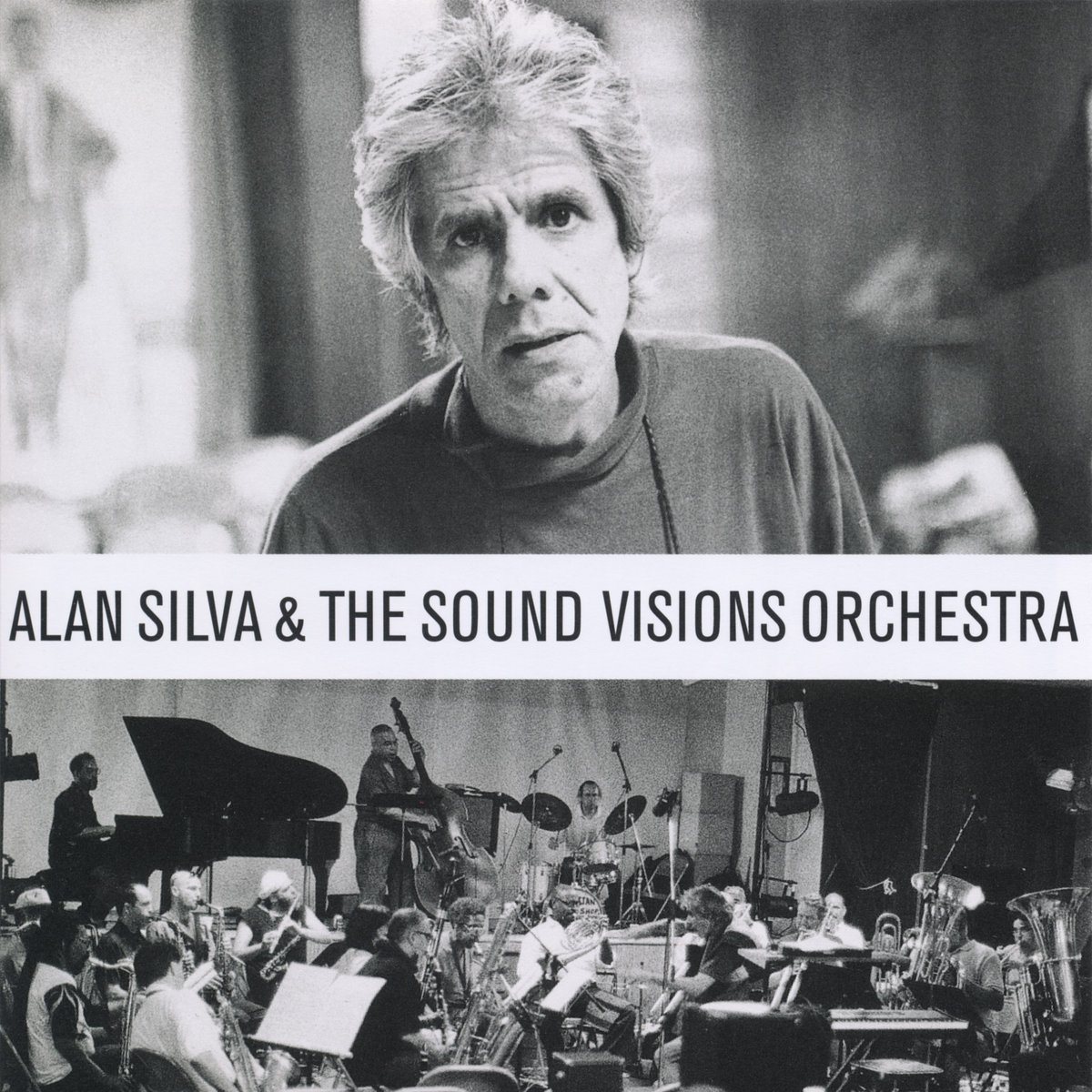
Alan Silva is one of the great bassists to come out of 1960s New York free jazz, and on Alan Silva & the Sound Visions Orchestra he barely touches a bass. He conducts from behind a synthesizer instead, directing twenty-three musicians the way he once directed a bow.
Silva was born in Bermuda in 1939, moved to Harlem at five, and by his twenties was working alongside Cecil Taylor, Albert Ayler and Archie Shepp, including a stint on the 1964 October Revolution in Jazz that helped kick the New York avant-garde into organised existence. He left for Paris in the early 1970s and stayed, forming the Celestial Communication Orchestra there and later co-founding a jazz conservatory, the Institute for Art, Culture and Perception. Big ensembles became his instrument as much as the double bass ever was.
The Sound Visions Orchestra was recorded live on 31 May 1999 at St. Nicholas of Myra Church in New York, during that year's Vision Festival, and released two years later on Eremite. Three untitled movements, well over fifty minutes combined, for a band that runs ten woodwind players deep before it even reaches the nine on brass.
That's an unusual ratio, and it shapes the record's whole texture: Elliot Levin, Karen Borca, Rob Brown, Sabir Mateen, Andrew Lamb and Kidd Jordan among the reeds, working in and around one another rather than trading solos in turn, while Raphe Malik, Taylor Ho Bynum and Steve Swell thicken the brass behind them. Underneath, Mark Hennen's piano, Wilber Morris's bass and Jackson Krall's drums hold a pulse that the horns are mostly free to ignore.
Borca's bassoon sits low under most of it, but on the opening movement she's given room to lead, coaxing something closer to devotion out of a band otherwise built for volume.
Later, she holds the floor steady while Jordan's tenor tears upward and Steve Dalachinsky, reciting over the ensemble rather than fronting it, adds a second kind of instrument entirely — a poet treated as one more horn in a very crowded section.
It's a demanding, occasionally chaotic listen, and the room doesn't do it any favours — a stone church straining to separate twenty-three players rarely will. But the ambition is the point. Silva had spent three decades proving that free jazz could scale up without collapsing into noise, and here he pushes that idea about as far as it goes, trading the instrument that made his name for the harder job of holding one this large together.